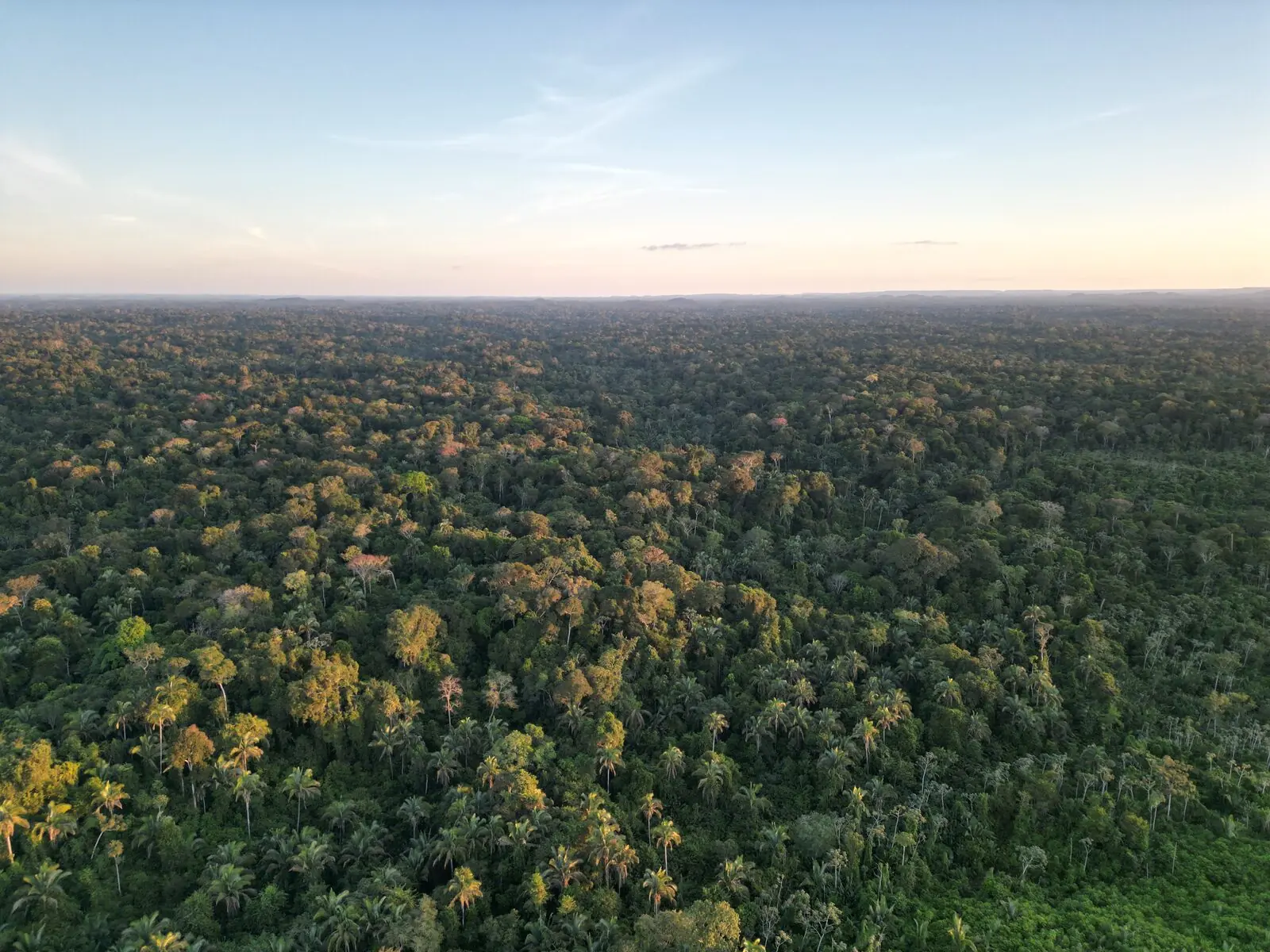
In the Terra Indígena Caru, an Indigenous territory in the state of Maranhão, the Forest Guardians, Indigenous teams who monitor and protect the territory, keep support bases at strategic points in the forest. These bases are used from time to time. It is precisely there that a connection is most needed in an emergency. Between these bases, the village and the nearest city lie kilometers of forest. In 2024, TECER (Tecnologias para Conexão Remota, or Technologies for Remote Connection), a project of Instituto Nupef, began to investigate whether an internet signal could cross that distance.
What is the goal?
The most common wireless networks, such as Wi-Fi and cellular networks, use high frequencies. They carry a lot of data, but they lose strength quickly when they meet obstacles such as a hill, a wall or the tree canopy. That is why these networks usually depend on line of sight, that is, a clear path from one antenna to the other. In the forest, that clear path almost never exists.
The goal of Phase 1 was to test a technology able to work with non line of sight, with the forest in between: TVWS, short for TV White Space. It is a form of wireless connection that uses frequency bands reserved for television but left unused in many regions.
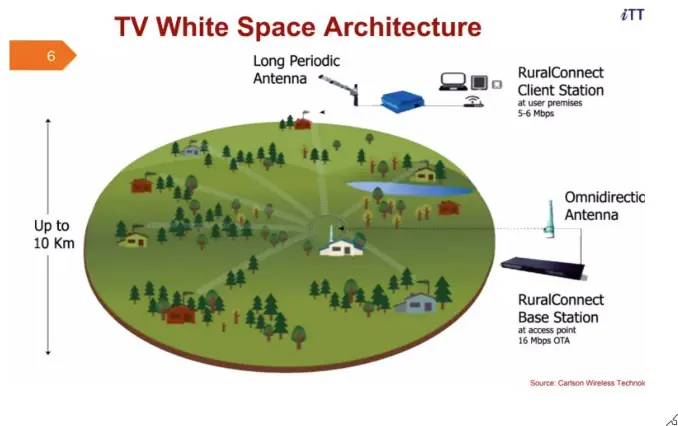
A TVWS network has two parts. The first is the base station, a radio with antennas installed at a high, central point, where the signal starts out. The second is the CPE, short for customer premises equipment: a smaller radio with an antenna, installed where the connection will be used, such as a home, a community center or a support base.
To picture the spectrum, imagine a wide river divided into channels side by side, each reserved for one kind of use: one for radio, others for television, others for cell phones. In many regions, some of the channels reserved for television are empty because no broadcaster transmits there. TVWS travels along these empty channels without disturbing the ones in use. The river image ends here. It explains how the spectrum is divided, but not why TV frequencies pass through vegetation better. That depends on the size of the wave and is covered in detail in the explanation of TVWS.
The bands used by TVWS are below 1 GHz, in a sub-gigahertz band much lower than that of Wi-Fi. That is why the signal reaches farther and gets around obstacles better. The idea was to link a point in the city, where the internet comes from, to the village and to the bases inside the forest.
What is the setting?
The Terra Indígena Caru is in western Maranhão and is the territory of the Awá Guajá and Guajajara peoples. Information about the Indigenous land, its population and its legal status is gathered by Instituto Socioambiental on the portal Terras Indígenas no Brasil (in Portuguese). The region faces invasions by loggers and land grabbers, recorded by the Indigenist Missionary Council (Cimi) (in Portuguese).
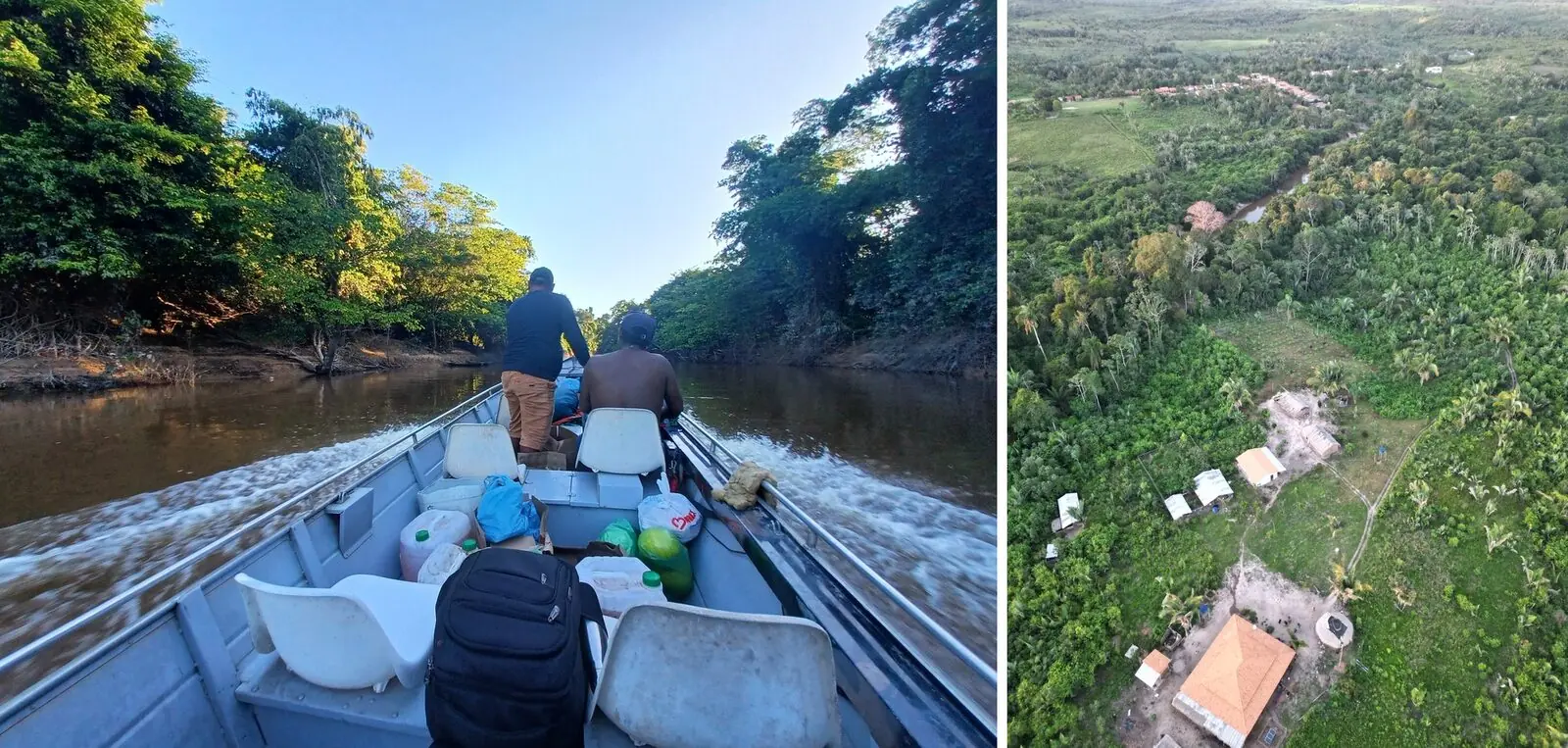
Nupef already had community network projects in the territory and knew its leaders. The initial plan was to run the tests in one of the main villages of the Terra Indígena Caru. Because of the community’s needs at that moment, the place chosen was the Tururi village, about three hours from Santa Inês, the nearest reference city.
The lack of connection in this region is not an accident of nature. It is the result of market and public policy choices, as shown in the report Redes na floresta (in Portuguese), by InternetLab, produced in partnership with Nupef. Data on internet access in rural areas and in Brazil’s North region are available in the TIC Domicílios survey (in Portuguese), published every year by Cetic.br.
What challenges did the Forest Guardians face?
The connection available at the Guardians’ bases had three limits. The dedicated link was expensive and sat underused most of the time. The connection became unstable in the rainy season. The data allowance ran out over the course of the year.
What are the possible solutions?
This led to two possible ways of using TVWS. The first was to extend the connection from the city to the village, working as backhaul. The second was to extend the connection from the village to the bases in the forest.
What are the two test scenarios?
Taking little-known equipment straight to a remote territory would be risky. Any defect would cost a new trip and would create expectations that might not be met. For this reason, the work was planned in two stages.
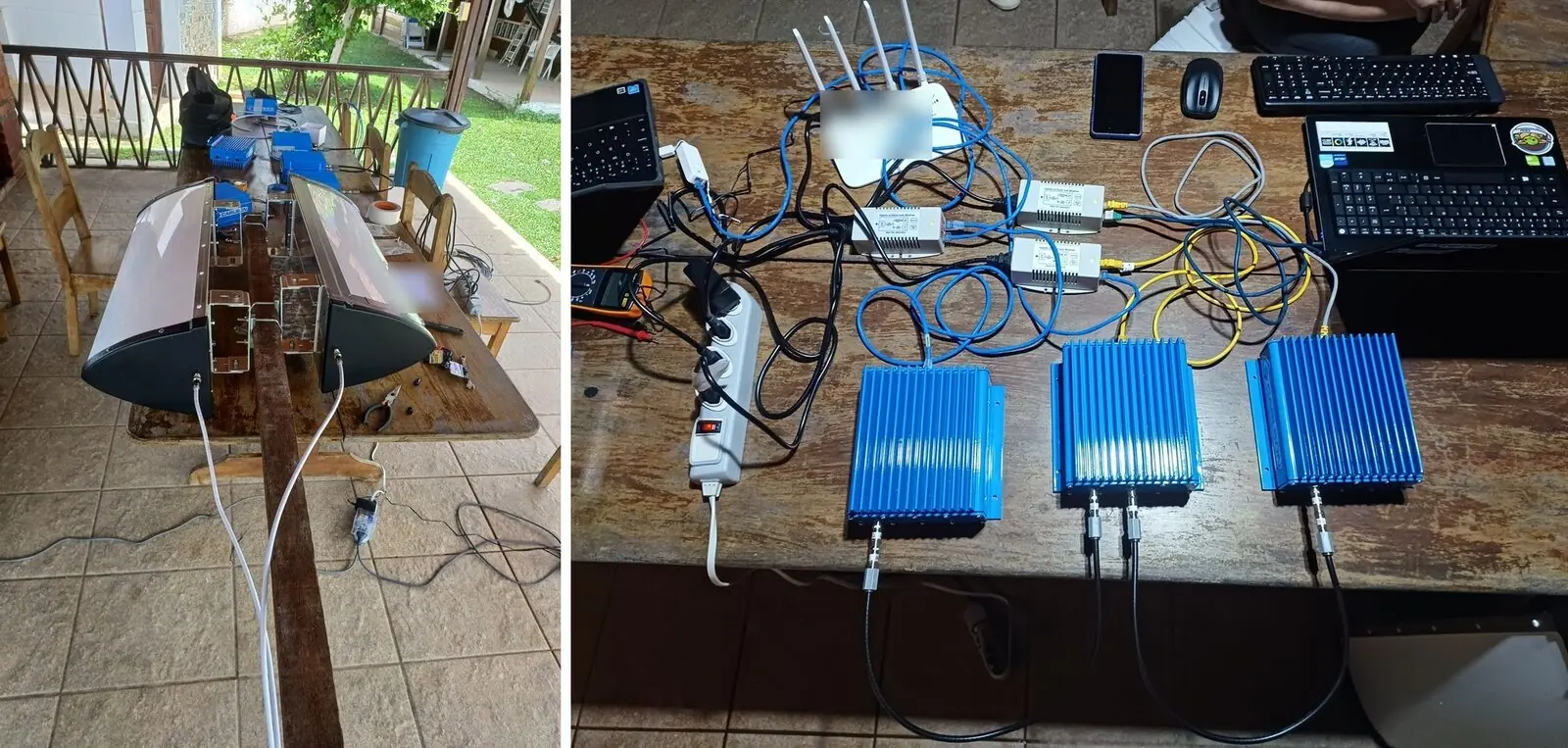
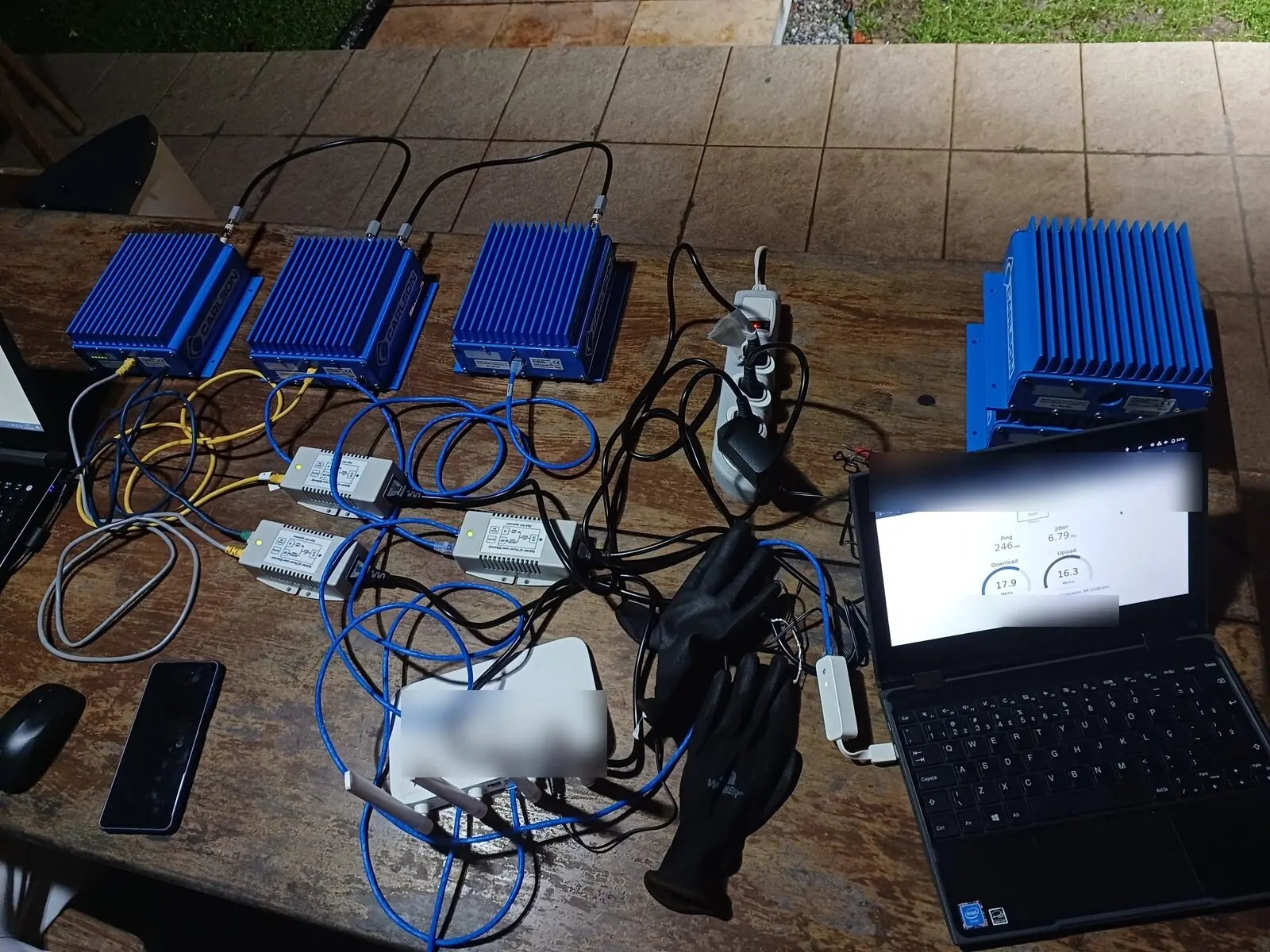
The first was a controlled environment: a test bench set up for seven days in a rented space in the Amazon region. The second would be the real environment: links of 10 to 15 km through the forest, with solar power for the bases, long-distance communication for the team and remote monitoring.
How was the equipment purchased?
Buying the TVWS radios was the slowest part of the planning: nine months passed between the decision and the arrival of the equipment. Few companies in the world make this type of radio and none had equipment with type approval in Brazil. Some did not respond to requests for quotes. The first reply took six months to arrive. The covid-19 pandemic also delayed the manufacturer’s production line.
There was also a less visible obstacle. For import companies, an order of a few units has a low value. There are also few people in the country specialized in this type of import, which increases the risk of the equipment being held at customs. The kit chosen was RuralConnect, by Carlson Wireless, purchased through a reseller. The field tests could only begin after the kit arrived.
What equipment was used?
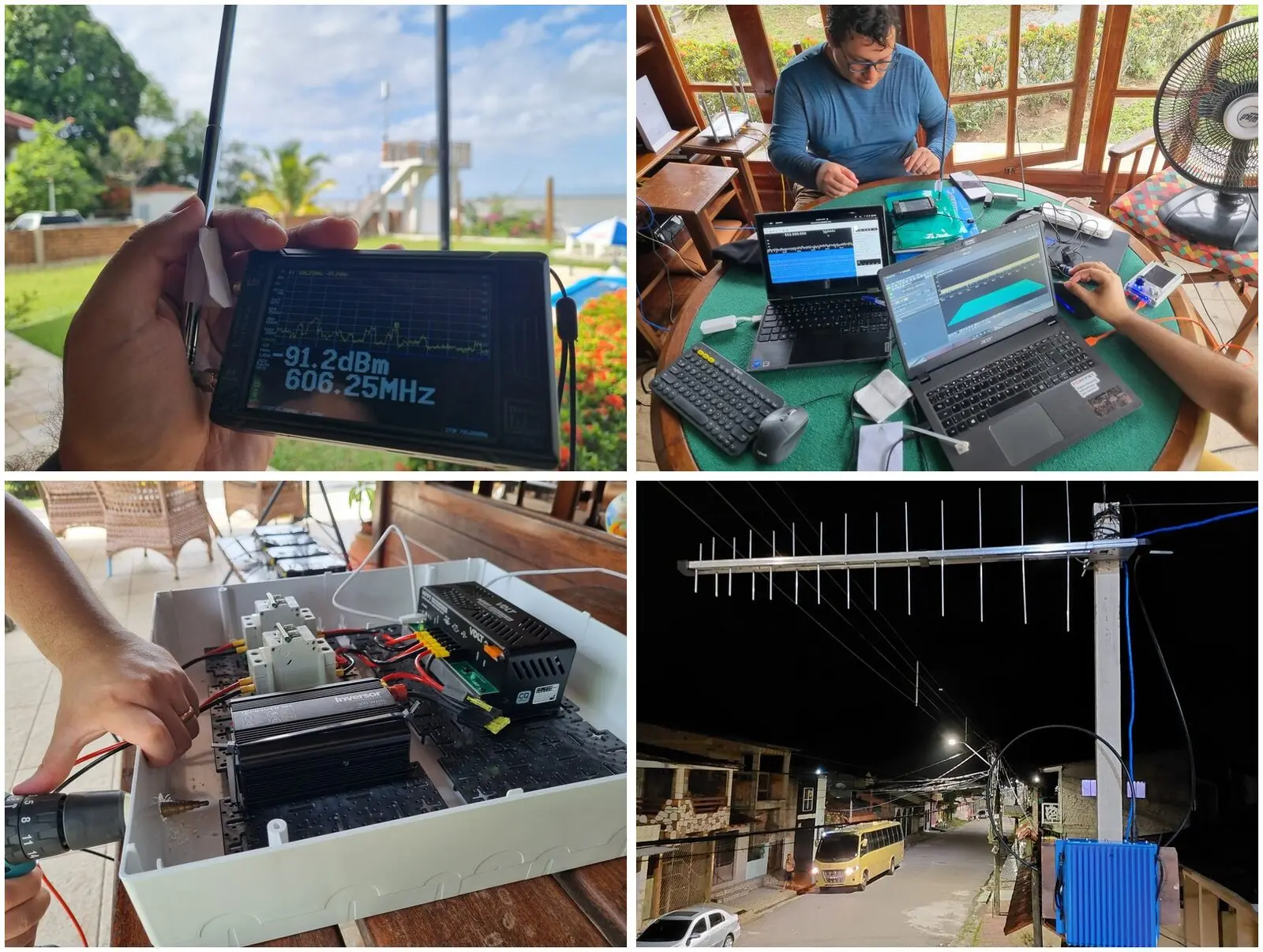
Besides the TVWS radios, the kit brought together instruments to observe the spectrum, such as a spectrum analyzer and software defined radios ( SDR). It also included an off-grid solar power kit, which works without the electrical grid, a backup connection via low Earth orbit satellite, HF radios for the team’s communication and a drone to observe the installation points from above. Each piece of equipment has a page in the Reference section, explaining what it is and linking to the documentation of whoever makes it.
How was monitoring done?
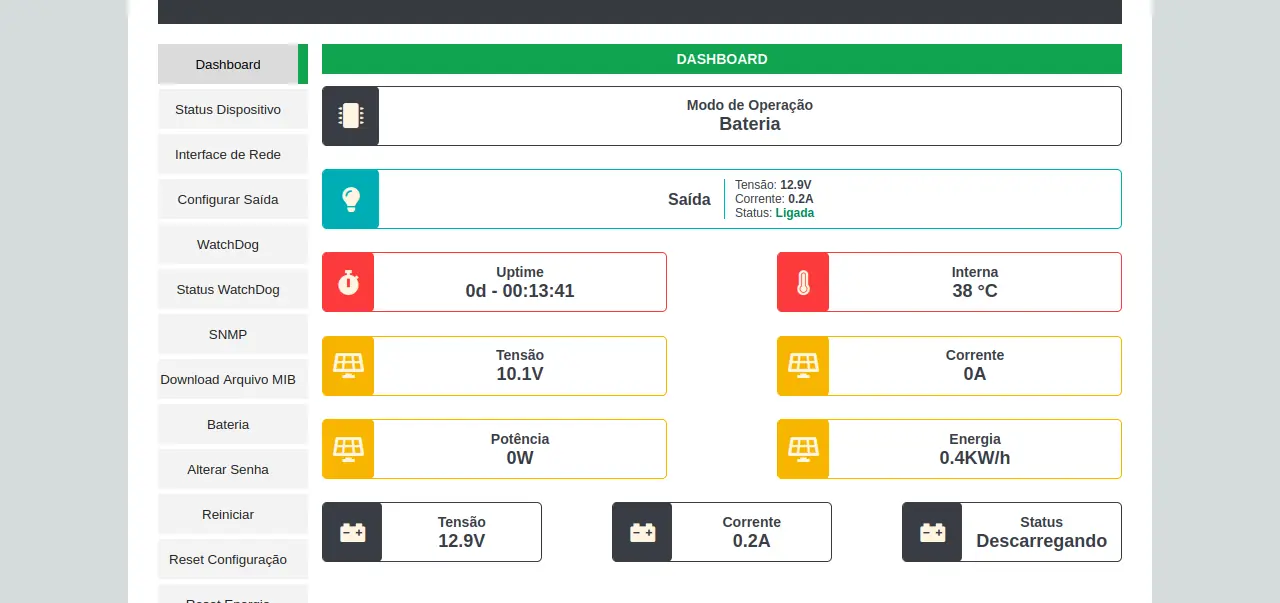
During the tests, it was necessary to keep track of the internet link, the network routers and the solar kit. For this, the technical team set up a monitoring stack with open source programs that collect data from the equipment, store this information and display it on dashboards with charts.
What now?
With the kit in hand and the two-stage plan defined, the next step was to leave the bench. The first test in a real environment took place in Mosqueiro, in the state of Pará, in conditions similar to those of the forest: water, vegetation and distance. The open question was whether the technology would deliver outside the laboratory what it promised in theory.
What we learned in this stage:
- Testing in a controlled environment before going into the field protects the territory. It avoids bringing to a community equipment that the team itself does not yet know well.
- The obstacle is not only the technology. For a civil society organization in Brazil, importing uncommon equipment involves suppliers, customs and timelines beyond its control.
- The same network can serve two purposes. TVWS could connect the village to the city or the village to the bases in the forest.
Sources
- Project facts: project proposal and Phase 1 logbook, Instituto Nupef, 2024 (internal documents).
- Instituto Socioambiental. Terras Indígenas no Brasil: Terra Indígena Caru. terrasindigenas.org.br (in Portuguese)
- Conselho Indigenista Missionário. Publications about the Terra Indígena Caru. cimi.org.br (in Portuguese)
- InternetLab. Redes na floresta: mapeamento das políticas de conectividade na região amazônica brasileira, 2025. internetlab.org.br (in Portuguese)
- Cetic.br/NIC.br. TIC Domicílios, indicators. cetic.br (in Portuguese)
Further reading
- How TVWS uses free bands of the TV spectrum (Explanation)
- Carlson Wireless RuralConnect (Reference)
Supported by: Internet Society Foundation (BOLT).