A piece of equipment can pass every laboratory test and still fail in the place it was designed for. In May 2024, after a test bench, a field test in Mosqueiro and a laboratory at the Federal University of Pará, the TECER project’s TVWS kit arrived at the Tururi village, in the Terra Indígena Caru, an Indigenous territory in the state of Maranhão. One question remained, the one that had mattered from the start: does the equipment work where it needs to work?
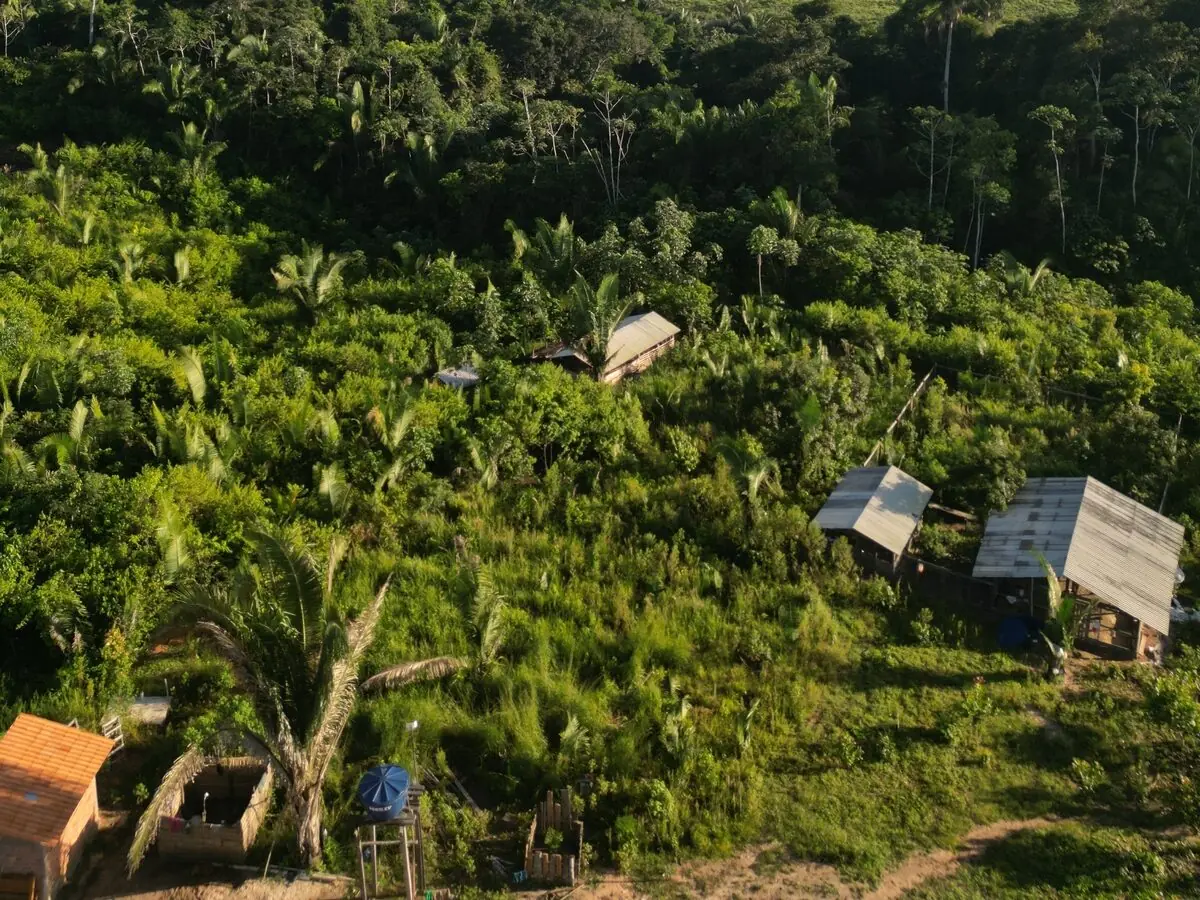
Tururi is three hours from the nearest reference city. Between the village and the Forest Guardians’ bases there is dense forest, with no clear path from one antenna to the other. This was exactly the condition the project wanted to evaluate: a signal that crosses the forest with non line of sight.
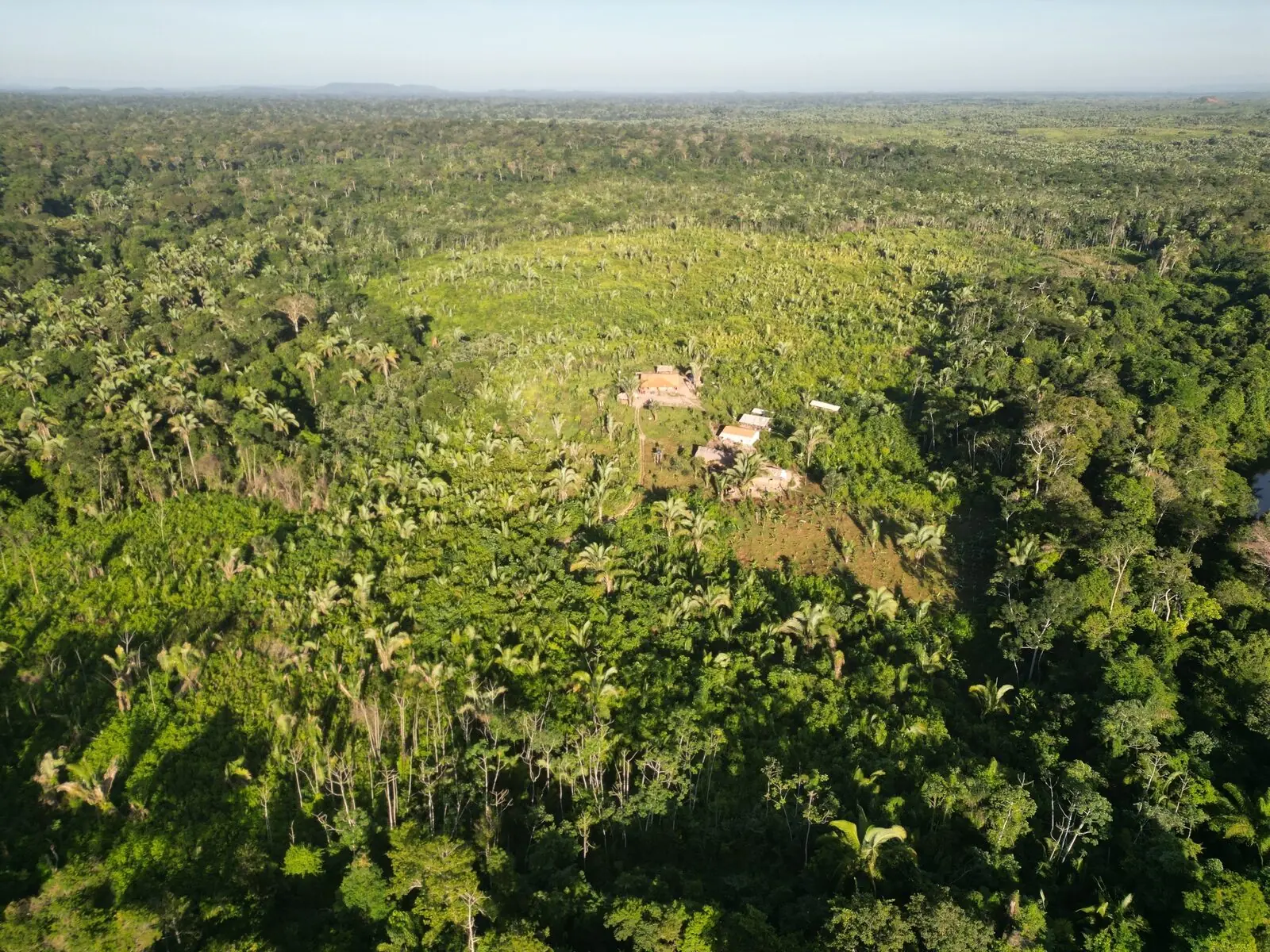
How did the trip go?
The deployment followed four stages:
- the team meeting in Belém and picking up the kit, which was stored at LASSE, the UFPA laboratory;
- the trip to Santa Inês and, from there, to Tururi;
- local installation;
- local and distance tests.
The distances give a sense of the work involved. From Belém to São João do Caru, a municipality next to the Terra Indígena Caru, it is about 560 km, or 11 hours by road. From Santa Inês to Tururi, it is about 140 km, or three hours.
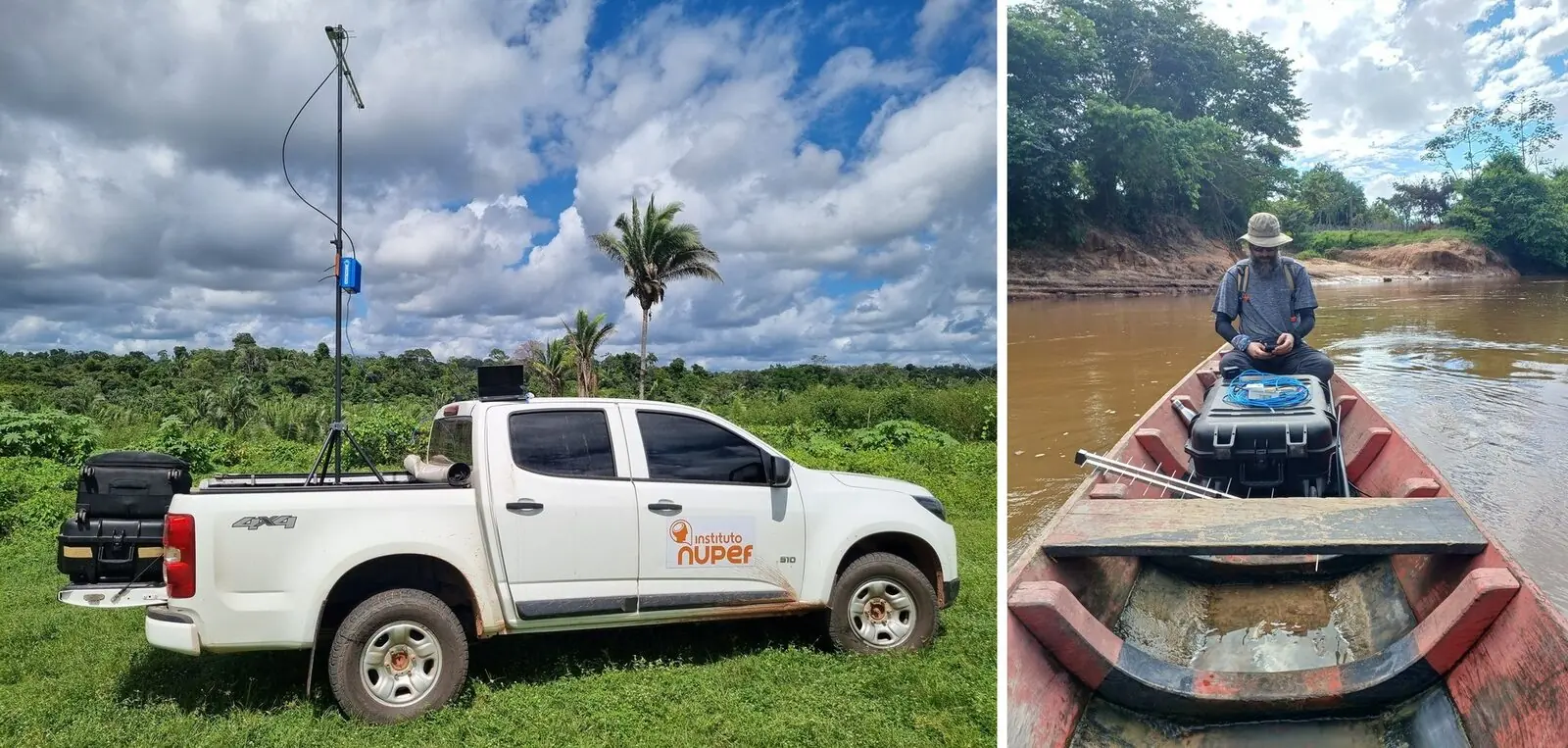
Inside the Terra Indígena Caru, the kit was carried in partnership with the Forest Guardians, Indigenous teams who monitor and protect the territory. They are the ones who use the support bases in the forest where a connection is most needed.
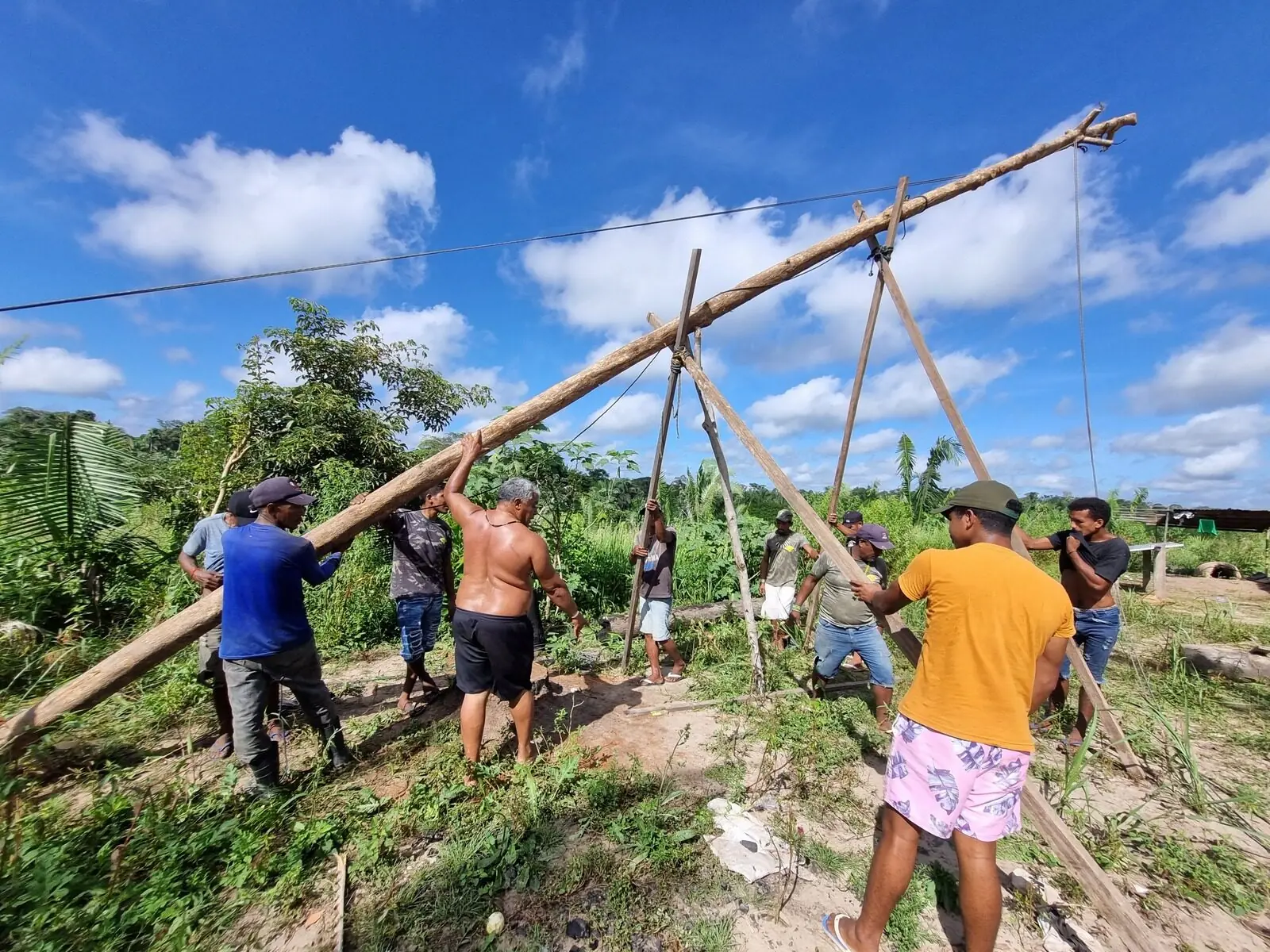
How did the local deployment go?
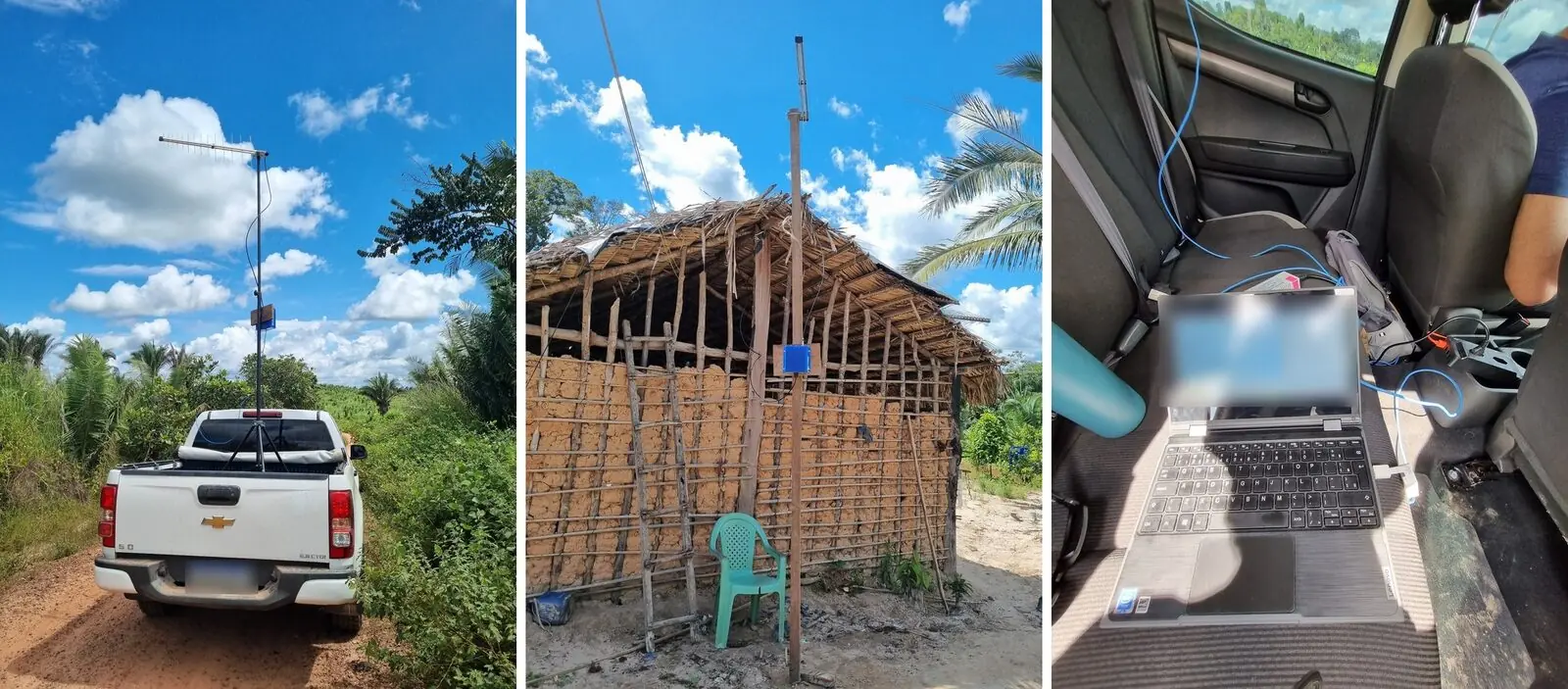
The first step was to confirm that the radios were actually transmitting. For this, the team used a HackRF with PortaPack, a portable software defined radio ( SDR) with its own screen, able to display the signals in a frequency band and play them as audio. With it, the team could verify that there was a signal on the TVWS channels in use.
Next, the team set up a 450-meter test link between the base station (the main radio) and a CPE (the smaller radio installed where the connection will be used). The CPE was placed at the house at the entrance of the village, with the antenna 3.5 meters high. At first, the connection fluctuated. The team installed an attenuator (a part that reduces the strength of the signal) and the link became stable.
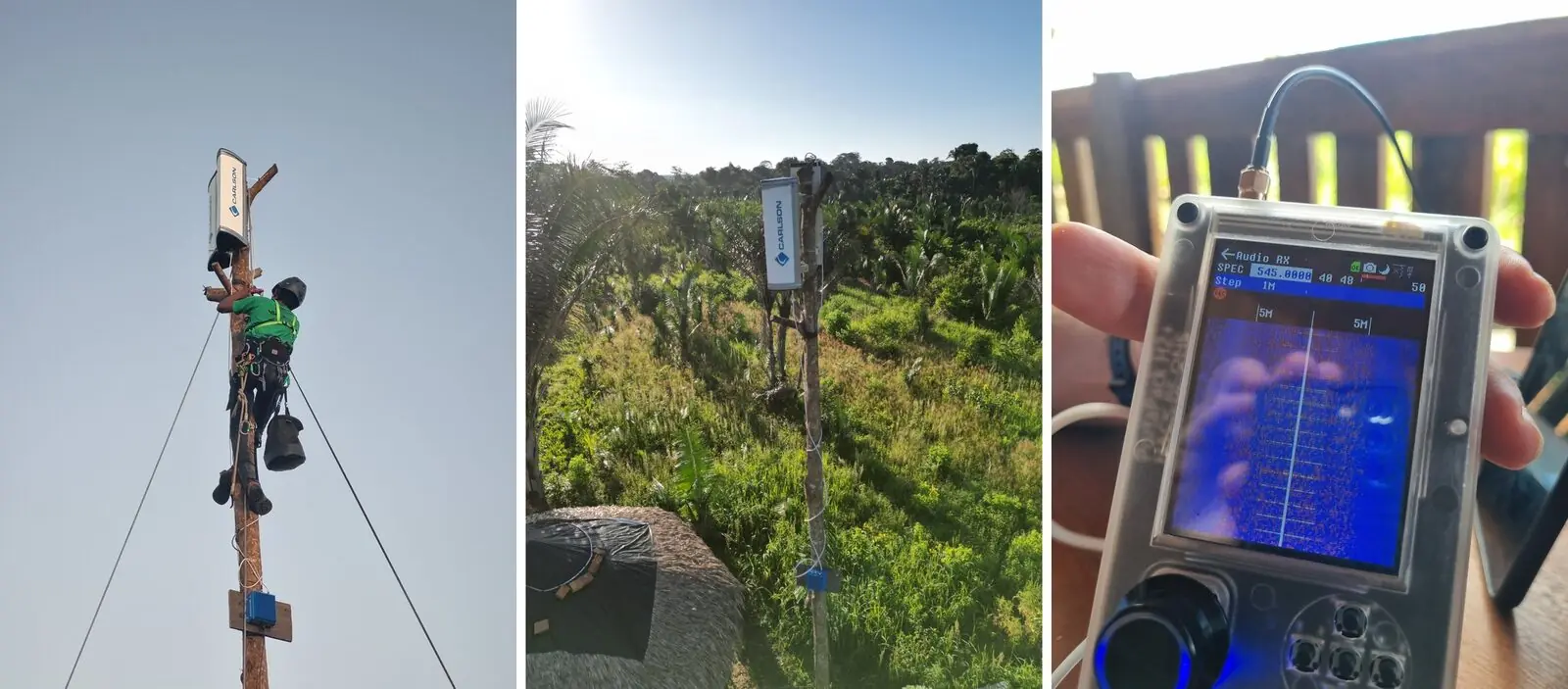
How did the distance tests go?
The base station in Tururi had two sector antennas, each facing one direction, like two flashlights lighting different parts of the land around the village. The team planned tests at six points. The sixth was removed from the plan because it was in a risk area. Five points were tested.
The three points served by the first antenna connected, in links of a few kilometers through the forest. The two points served by the second antenna did not connect. The sixth point, which would also have depended on the second antenna, could not be tested.
The pattern stands out: all the successes on one antenna, all the failures on the other. This suggests that the problem was in the second antenna or in the area it covered. But the image of the flashlights ends here. It shows where the signal arrived and where it did not, without saying why. None of the tests carried out in this stage made it possible to confirm the cause.
The outcome is positive, although partial. The local link became stable and three of the five points connected through the forest, without line of sight. Two points, however, did not connect and we do not know why yet.
What we learned in this stage:
- A connection without line of sight through the forest is possible under the conditions tested in Tururi, but with a coverage that still needs to be understood.
- Good performance from one antenna does not guarantee the same from the other, even at the same site and with the same equipment.
- On short links, reducing the signal strength can stabilize the connection. Adjusting the signal to the distance is part of the installation.
- A successful installation still leaves open questions. Recording them is part of the result.
What are the next steps?
With the end of this round of field tests, the team defined four lines of work:
- testing a new generation of TVWS equipment;
- testing lower-cost alternatives;
- seeking new academic partnerships;
- following the rules on spectrum use in Brazil.
Sources
- Project facts: Phase 1 logbook, Instituto Nupef, May 2024 (internal document).
Further reading
- Confirm that a TVWS radio is transmitting (How-to guide)
- Why a radio link has a shorter range than predicted (Explanation)
Supported by: Internet Society Foundation (BOLT).