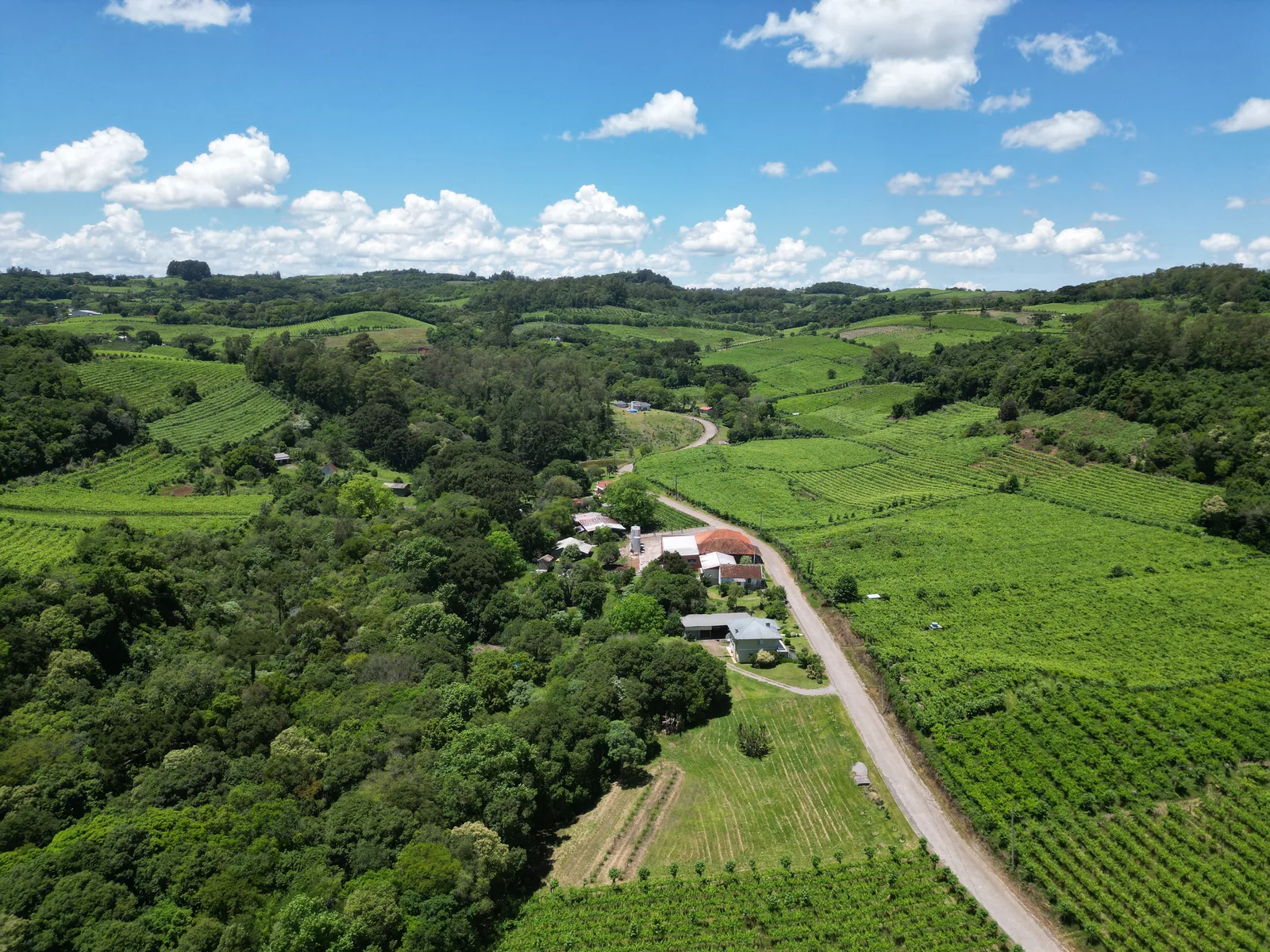
Before taking new equipment to the forest, it pays to get to know it somewhere you can easily turn back. In November 2025, the TECER team spent a week in Garibaldi, in the hills of Rio Grande do Sul, unboxing the new generation of TVWS radios and the LoRa radios running Meshtastic. Vineyards took the place of the forest. The question was the same as in Phase 1: does the equipment work as promised?
Why test in Rio Grande do Sul?
One of the lessons of Phase 1 was to test first, in a controlled and easy-to-reach place. The test house, surrounded by vineyards and wooded slopes, had what fieldwork in the forest does not offer: stable power, internet and time to repeat the tests. The hilly terrain, with ridges and valleys, also made it possible to watch the signal crossing obstacles.
What was in the boxes?
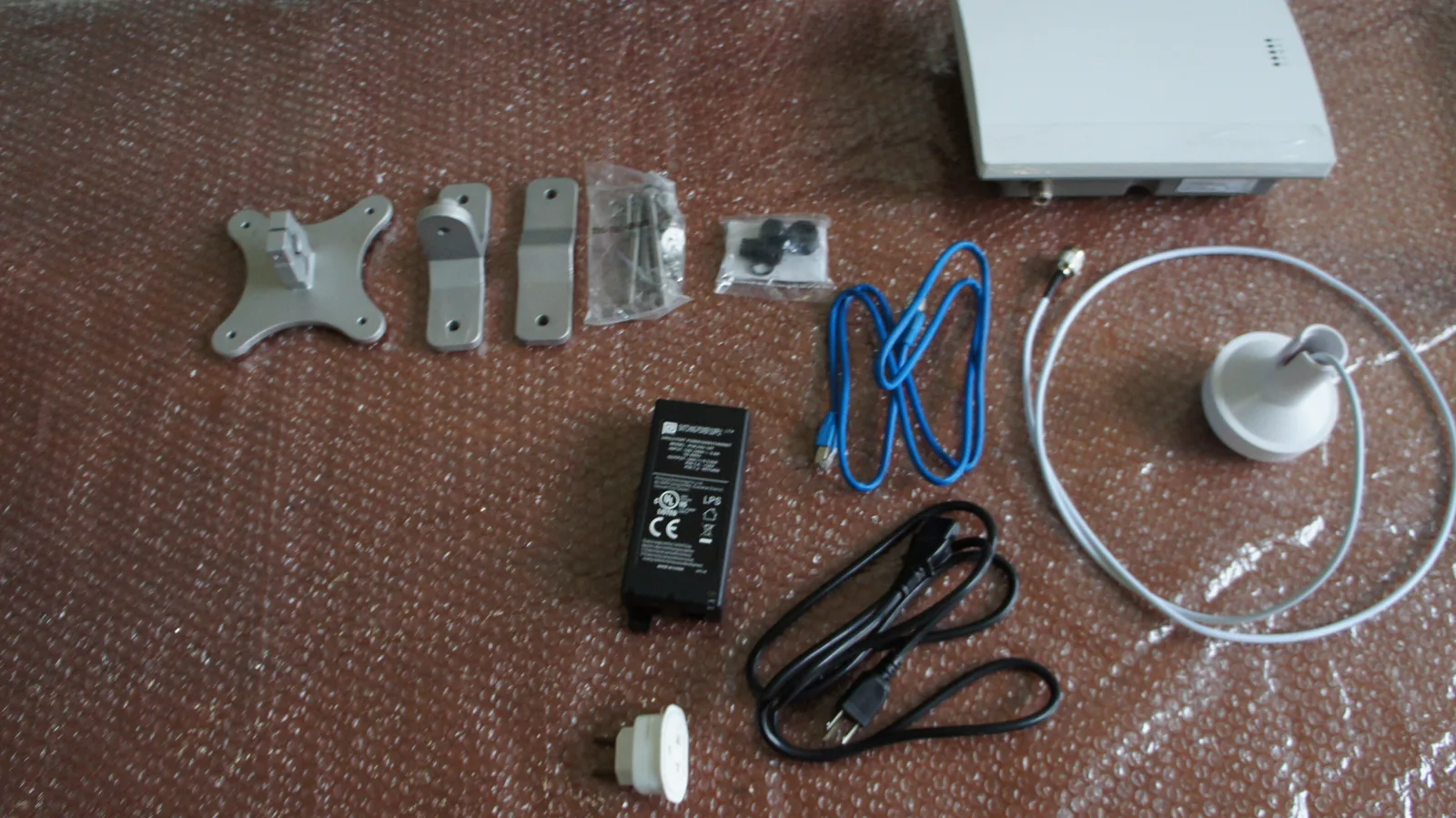
The Phase 2 TVWS kit, bought from the manufacturer WiFROST, came with:
- two base stations, the main radios the signal starts from;
- two EPCs, small computers that act as the network core: they authenticate the CPEs and route data to the internet;
- four CPEs, the smaller radios installed where the connection will be used;
- sector antennas, brackets, cables, PoE power supplies and mounting accessories.
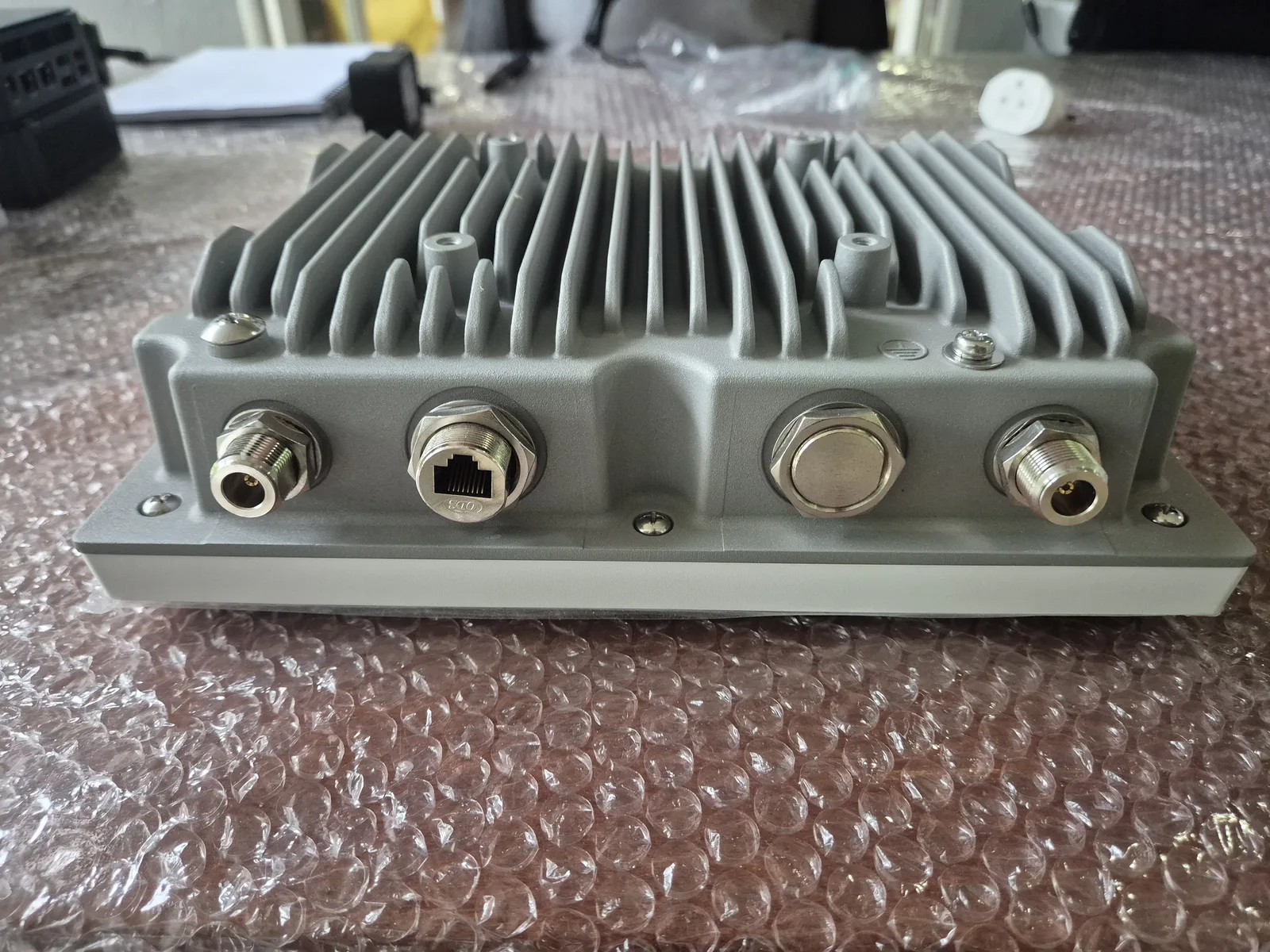
On the first day, 3 November, the team opened the boxes, checked the parts and powered up one base station and one CPE.
Over the following days, the radios were mounted on masts with the sector antennas, the cables were assembled and the test network was drawn on paper before being configured.
How did the LoRa and Meshtastic tests go?
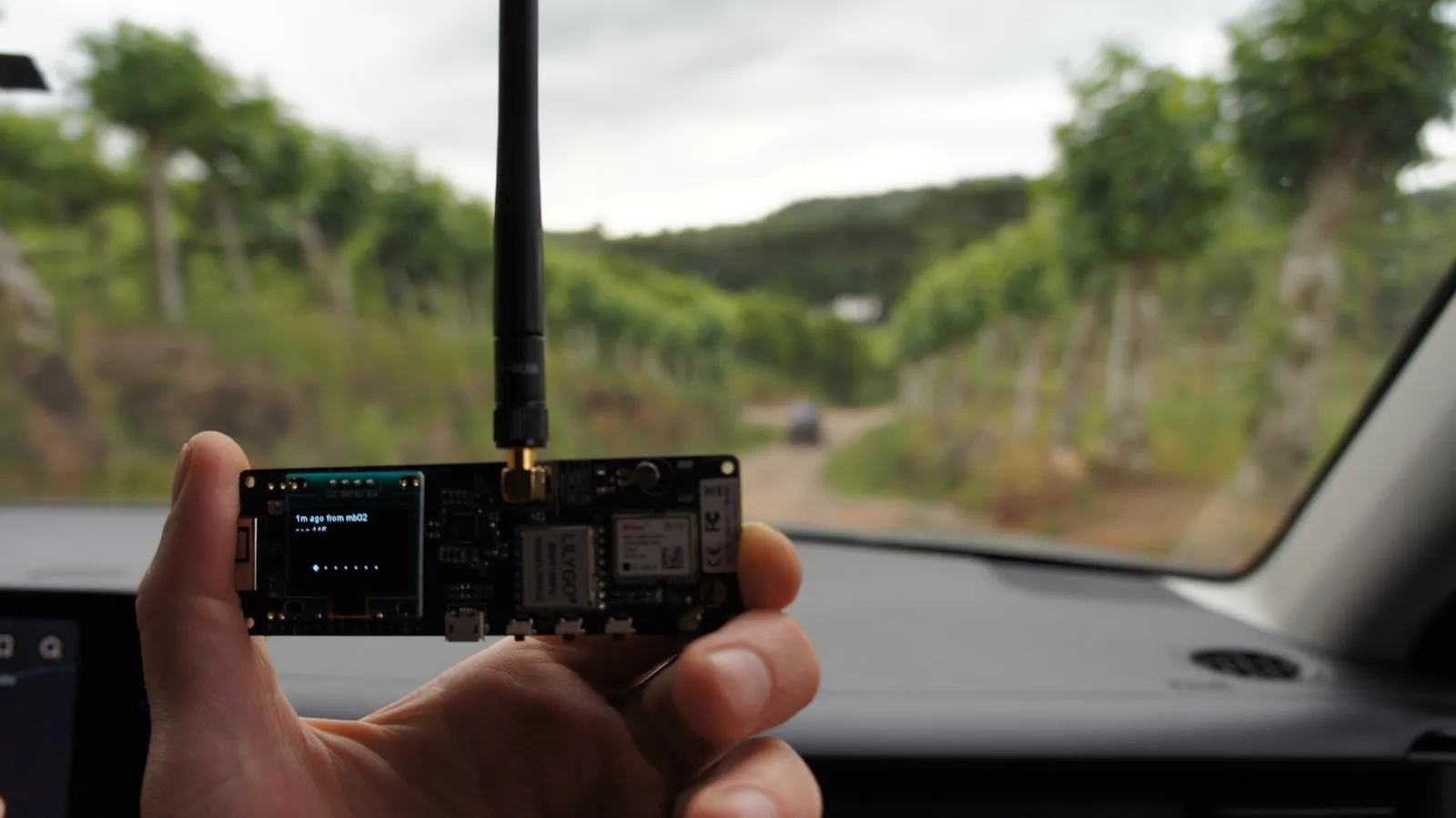
Alongside TVWS, the team flashed the Meshtastic firmware onto LILYGO and Heltec LoRa radios and built the first nodes of the network’s second layer. One of them was hooked up to a small solar panel.
The simplest test was also the most telling: driving along the dirt roads between the vineyards with a radio in hand to see how far the messages reached. On the screen, each message received shows which node it came from and how long ago.
What did the measurements show?
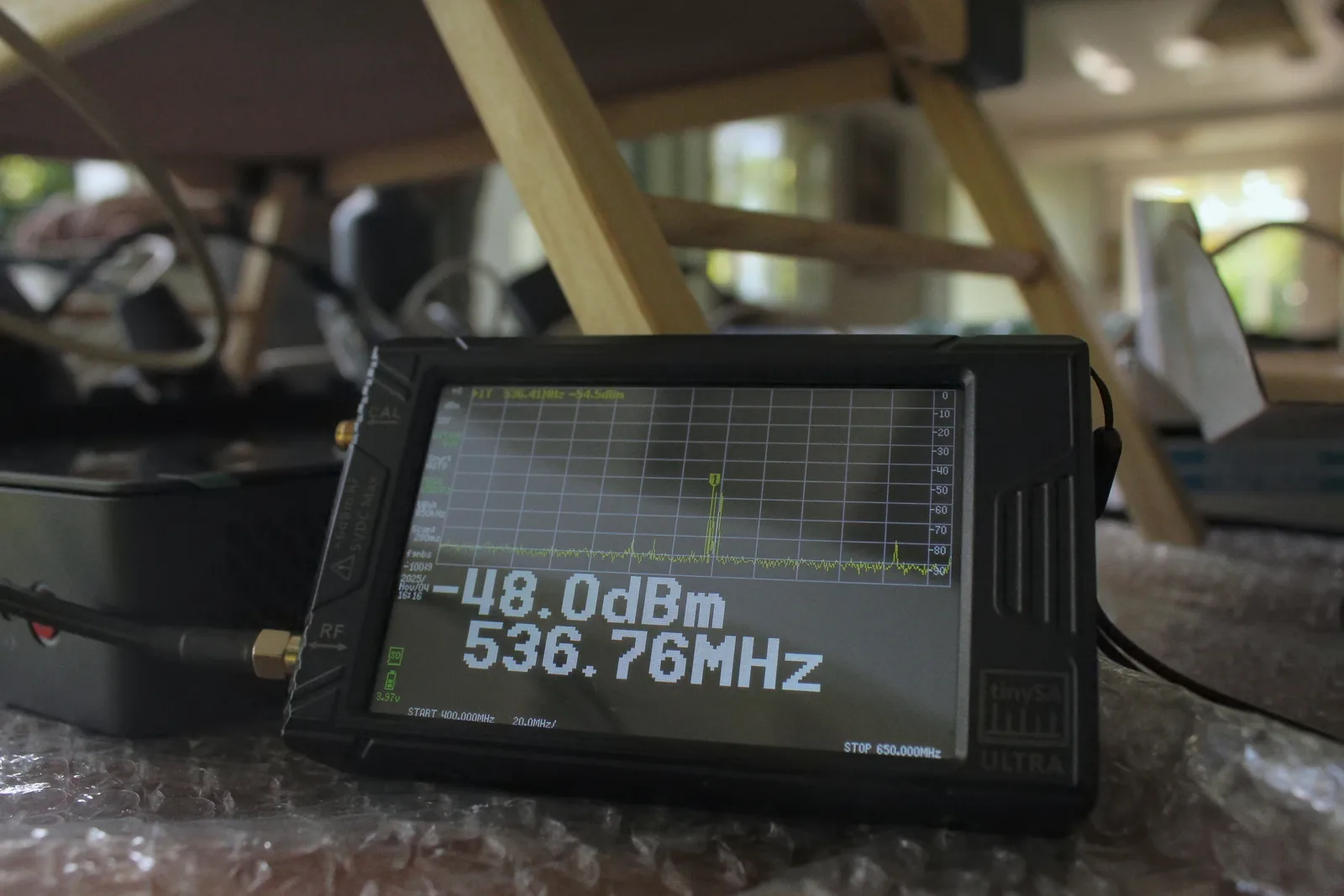
With a handheld spectrum analyzer, the team checked that the TVWS radios were transmitting on the configured channels, in the UHF band used by television. It is the same care taken in Phase 1: before blaming the link, make sure the signal is on the air.
The radio link came up. The CPEs connected to the base station and showed as registered in the manufacturer’s system. But data did not get through: a computer plugged into the CPE received a network address but could not browse. The behaviour repeated with all four CPEs and both base stations.
On 5 November, with the test window nearly over, the team opened a support channel with WiFROST. A technical meeting took place on 7 November. The manufacturer reviewed the settings and logs and pointed to the network feeding the lab, not the radios, as the likely cause. The diagnosis was not conclusive.
Where did the equipment go?
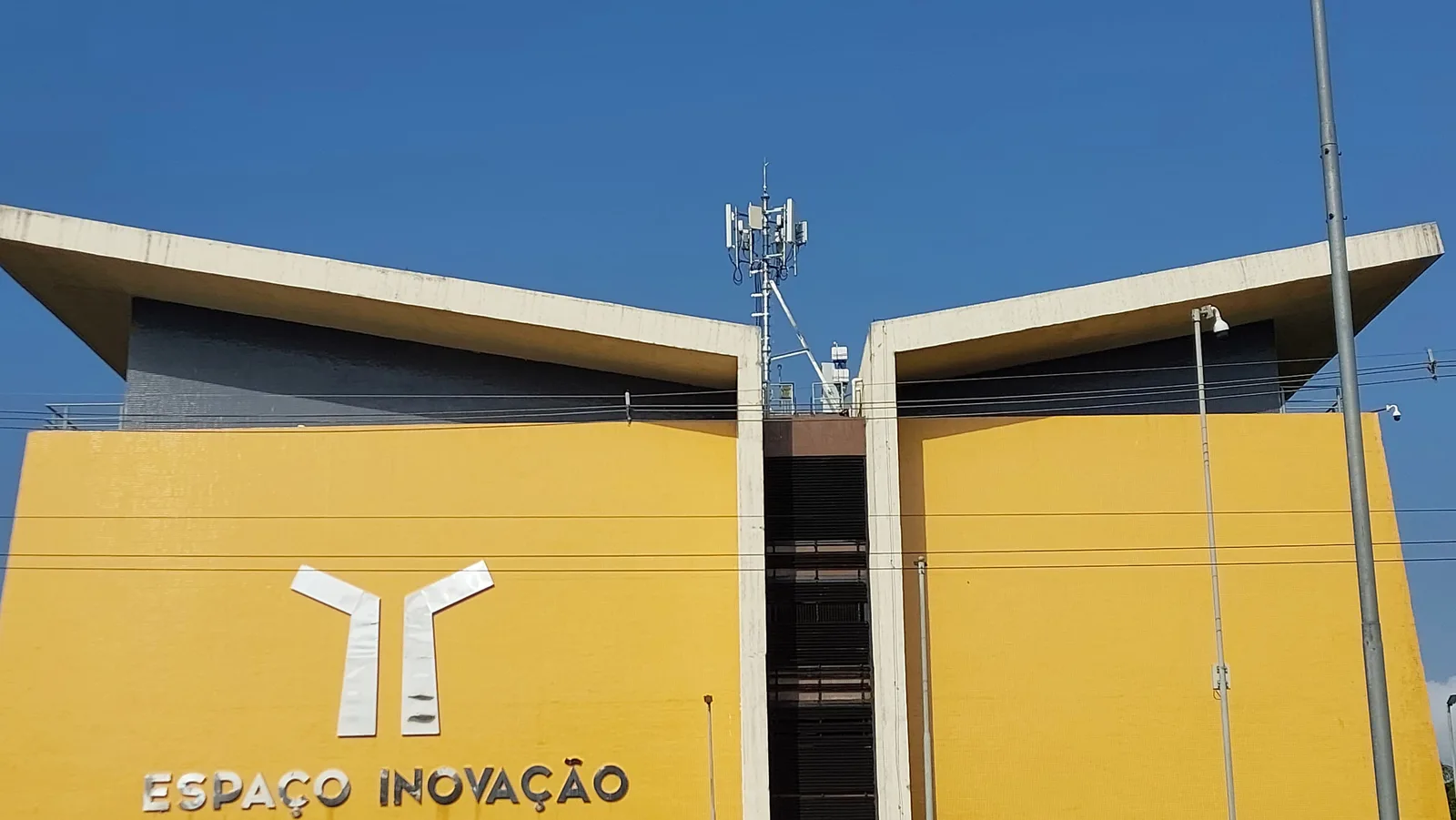
On 19 November, the kit was packed and shipped to Belém, in Pará, where the permanent installation will be. The working base in Pará is the Guamá Science and Technology Park (PCT Guamá), next to UFPA and LASSE, a partner lab since Phase 1. By late November, the team was already at the park, preparing the next stage.
What we learned at this stage:
- Testing far from the forest pays off. In one week the team got to know the equipment, built the network and found a problem that, in the field, would have cost a whole trip.
- A radio link on the air is not the same as internet arriving. The signal can be perfect and data still not get through.
- The LoRa layer is simple to build and test. A few radios and a small solar panel are enough to exchange messages without internet.
What comes next?
The data problem travelled with the equipment. The next stage was to investigate, on the bench, why the link came up but the internet did not arrive.
Further reading
- Confirm that a TVWS radio is transmitting (How-to guide)
- Set up a TVWS test bench with attenuators (How-to guide)
- How TVWS uses free bands of the TV spectrum (Explanation)
Supported by: Internet Society Foundation (BOLT).