At the end of May 2026, the TECER team went back to Belém with three tasks on the same trip: take part in the Brazilian Internet Forum, confirm with the community where the network would be installed, and resume, on the bench, the investigation of the TVWS radios that brought the link up but did not let the internet through.
What is the Brazilian Internet Forum?
The Brazilian Internet Forum (FIB) is the yearly meeting organized by the Brazilian Internet Steering Committee (CGI.br) to discuss the direction of the internet in the country. It brings together government, companies, universities and civil society organizations. In 2026, the forum was held in Belém.
For TECER, it was a chance to bring the conversation about connectivity in remote areas of the Amazon closer to the people who shape public policy, and to use the trip to move the fieldwork forward.
How was the final site confirmed?
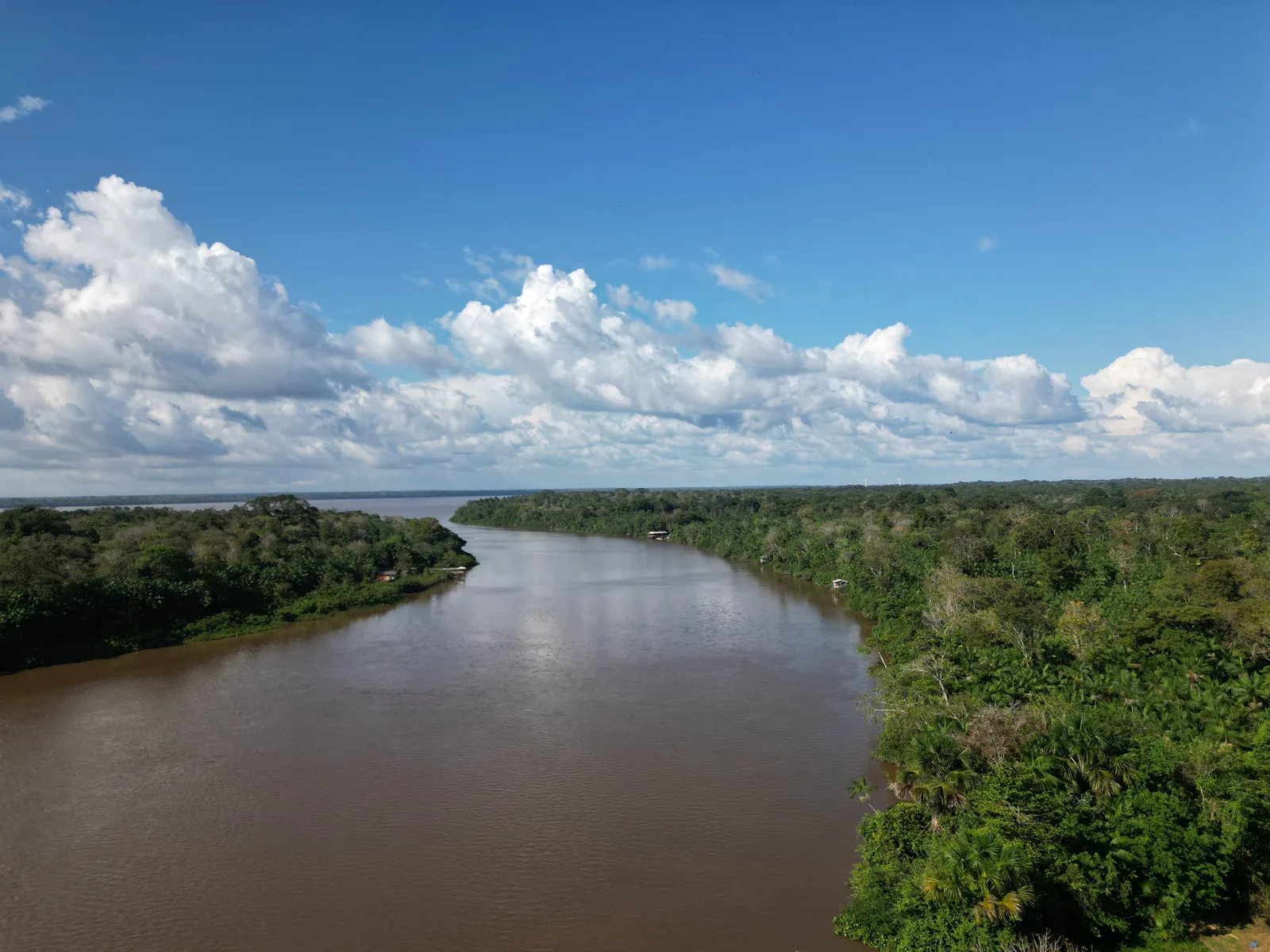
On 2 June, the team drove back to the communities visited in January. The route went along dirt roads, through villages in the forest and past stretches of river, with drone flights to see the terrain between one point and another from above.
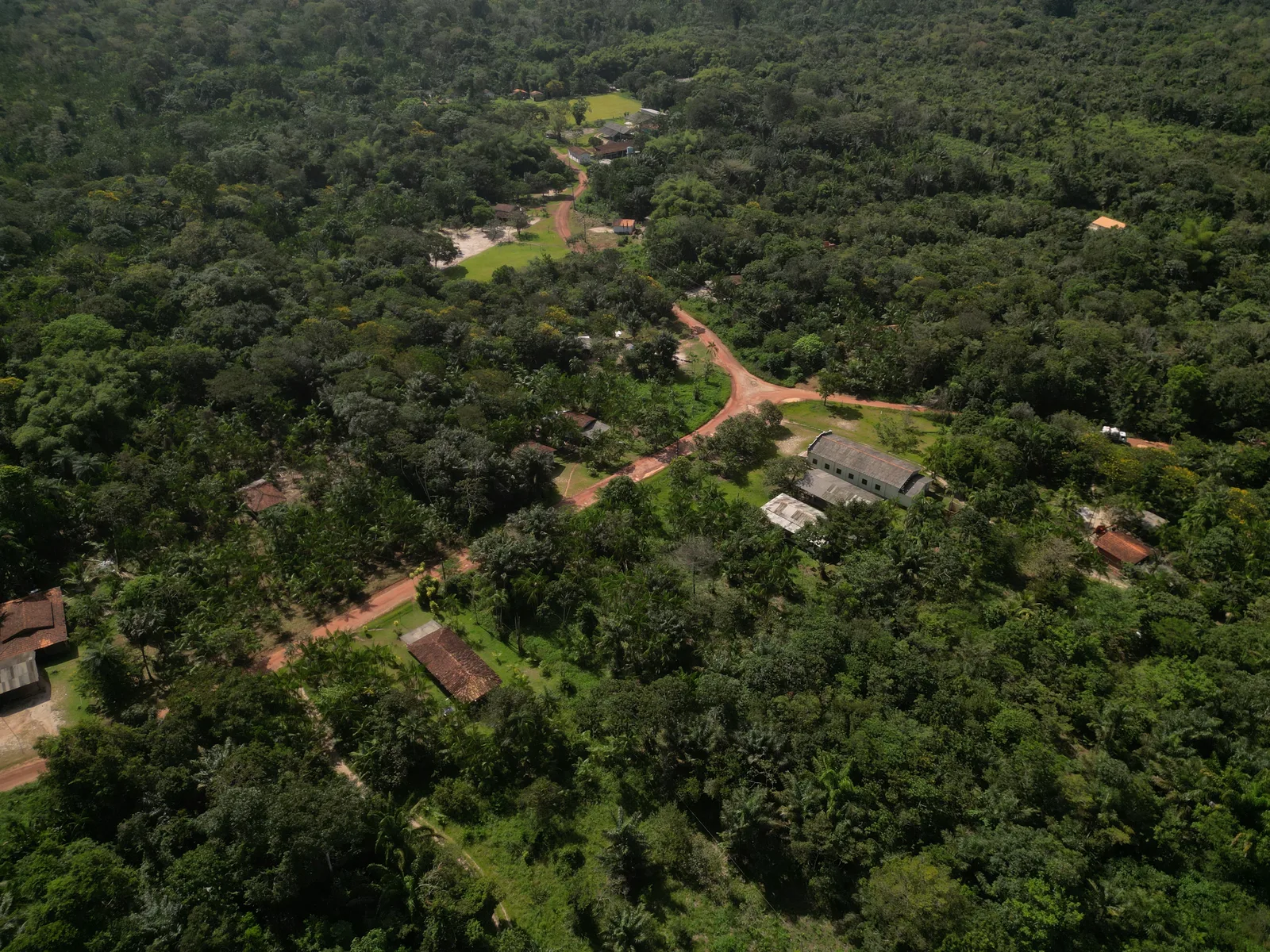
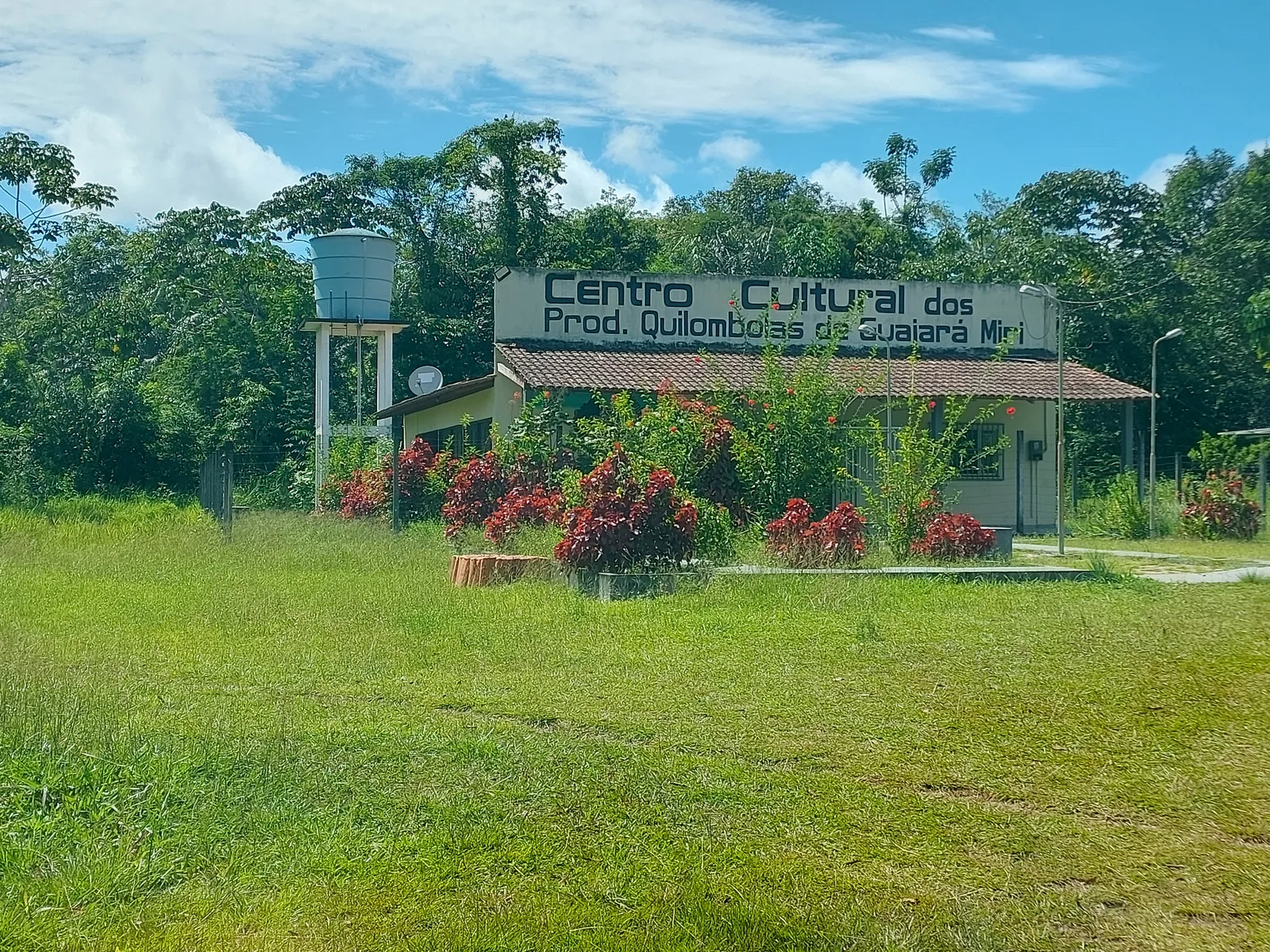
The visit confirmed the installation site: the quilombola community of Guajará Miri, home to the Cultural Centre of the Quilombola Producers. It has an open area, buildings where the equipment can be installed, and road access.
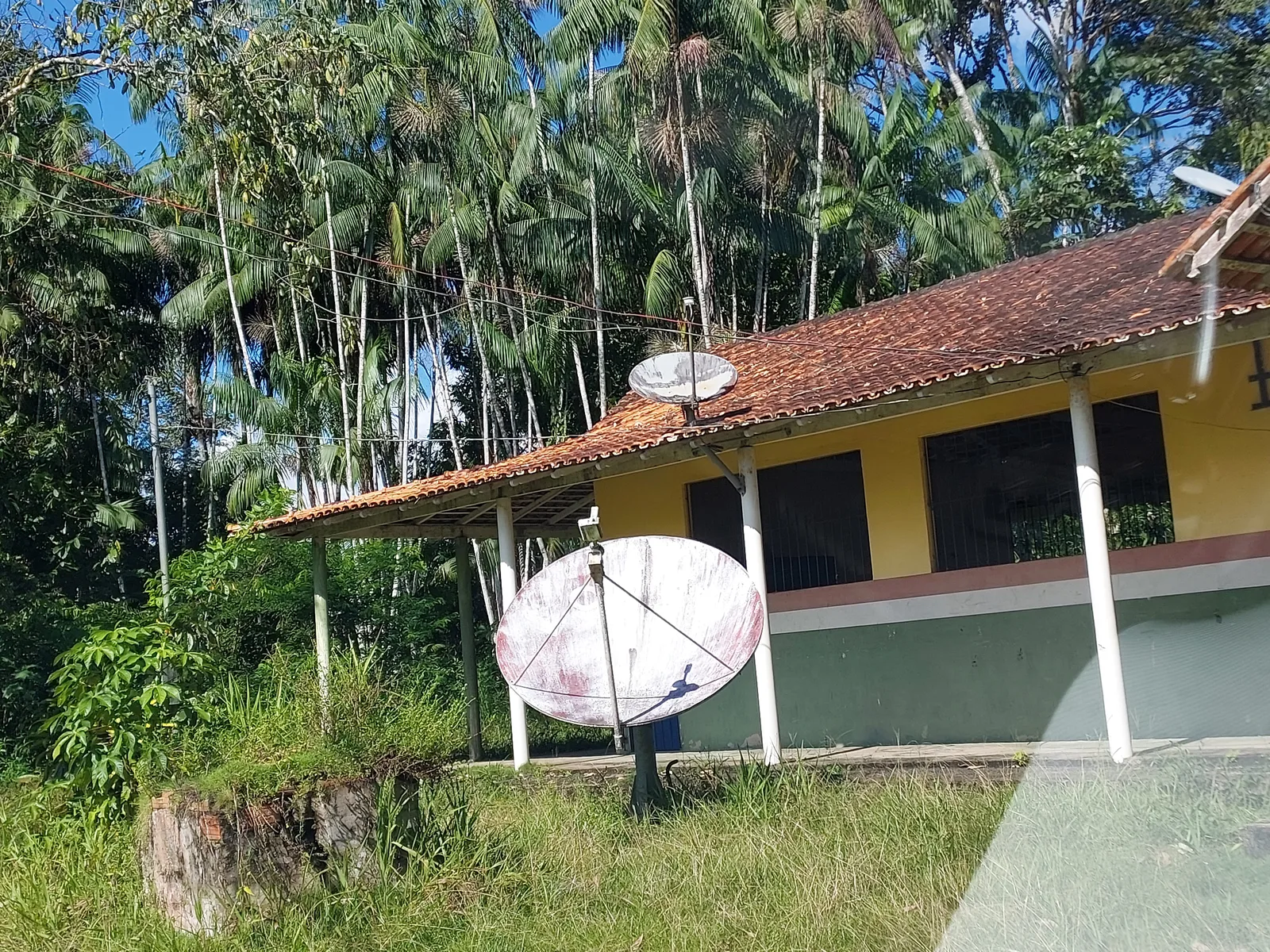
Along the way, old buildings with satellite dishes showed how the region gets a signal today: through satellite television, which arrives but does not carry internet.
What did the new bench tests show?
On 27 and 28 May, the test bench was set up again in Belém with the academic partners. The team redrew the whole test network, device by device, and confirmed the earlier picture: the EPC and the base station worked and reached the internet; the CPE was authenticated; the computer plugged into it got an address, but no data got through.
On 1 June, all four CPEs were brought online at the same time. To keep the networks apart, the manufacturer suggested connecting the second base station to its own EPC. The behaviour repeated on all of them.
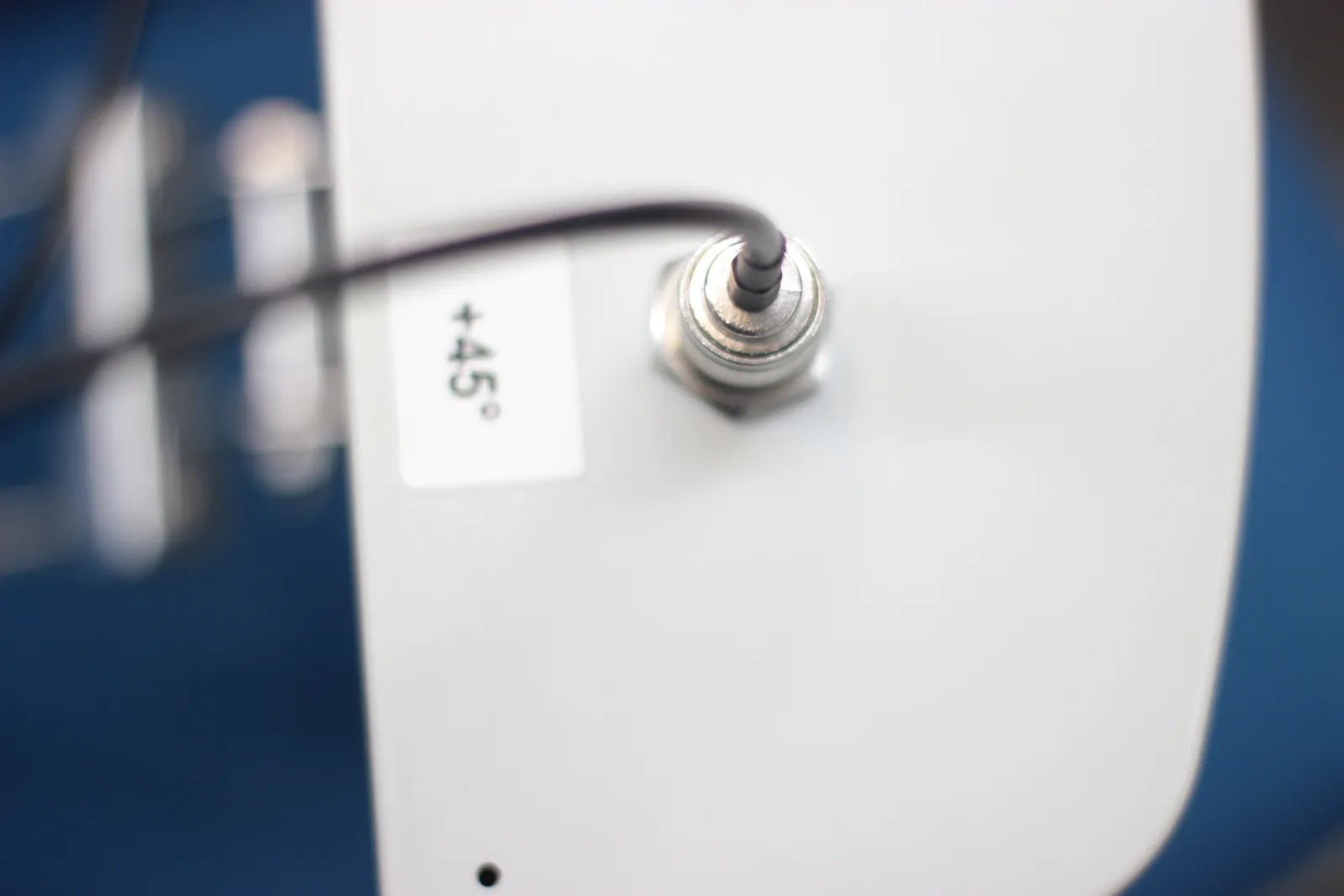
A few days later, the second base station stopped powering on. The team swapped parts: its power supply worked normally on the first base station, but no supply, not even the one known to be good, could power the second. The manufacturer and the team confirmed a defect in the unit’s power input.
What was the new support request?
With the data fault unsolved and one base station defective, the field range tests were put on hold. There was no point measuring distances with equipment that still failed at the basics on the bench.
The manufacturer’s own support team acknowledged that remote assistance had run out of tools and recommended sending a technician on site. In mid-June, the team sent new videos documenting the fault and the part swaps made on the bench.
What did we learn at this stage?
- The site is chosen with the community. Returning to the territory after the first visit made it possible to confirm the installation point with the people who will use the network.
- Testing all units at once shows whether the problem is one part or the whole system. With all four CPEs failing the same way, the cause was not a single device.
- Swapping parts isolates the defect. Exchanging power supplies and cables between the two base stations showed exactly where the power fault was.
- Remote support has limits. When logs and remote tests are not enough, someone needs to be on site.
What comes next?
With the site confirmed, the installation was scheduled for August. The team decided not to wait for the TVWS fix to bring the network to the community: install the local networks and the solar Meshtastic nodes, and use a temporary internet exit while the TVWS link does not carry data.
Further reading
- Set up a TVWS test bench with attenuators (How-to guide)
- How TVWS uses free bands of the TV spectrum (Explanation)
Supported by: Internet Society Foundation (BOLT).