Every long journey has a stop to look at the map. In 2024, TECER’s Phase 1 took a TVWS kit from the lab bench to the forest of Maranhão. In 2025, before starting Phase 2, the Instituto Nupef team stopped to look at the road travelled: what worked, what did not, and what had to change. That review gave rise to the new proposal, with a new territory, a new generation of equipment and a second network layer.
What was Phase 1?
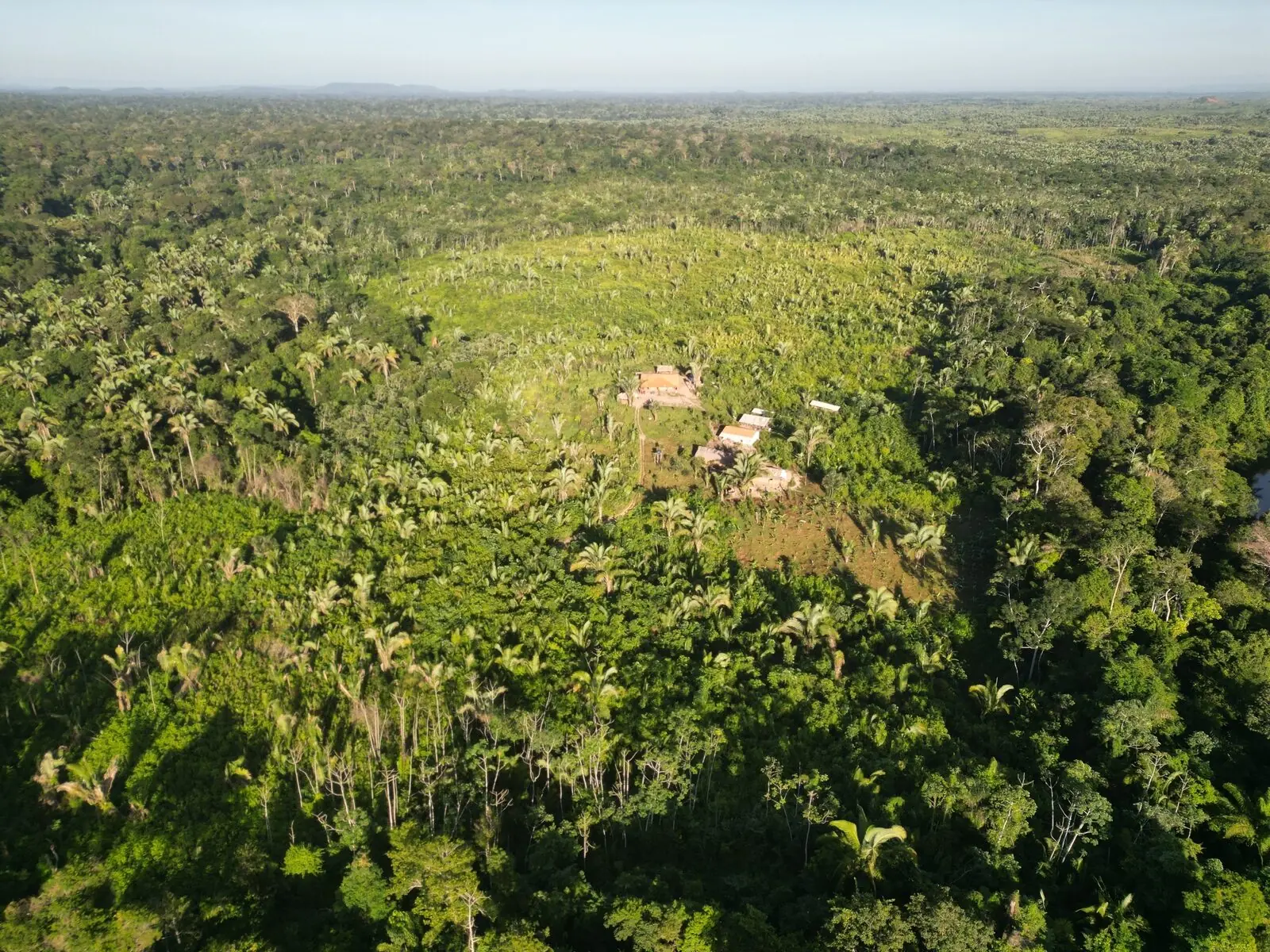
Phase 1 tested whether an internet signal could cross kilometers of forest without line of sight, that is, with no clear path between one antenna and another. The bet was TVWS, which uses unused television channels. These channels sit in the sub-gigahertz band, below 1 GHz, where waves get around obstacles better than wifi or cellular signals.
The work was done in four stages, between January and May 2024:
- Mosqueiro (Pará): first field test, where the signal did not go beyond 400 meters and six hypotheses came up to explain the short range;
- LASSE, at UFPA (Pará): lab work, where the team confirmed two causes, cable loss and oxidized connections;
- Trip to Maranhão: the kit travelled from Belém to the Terra Indígena Caru;
- Tururi village (Maranhão): deployment with the Forest Guardians, with three out of five points connected through the forest.
What technology and tools were used?
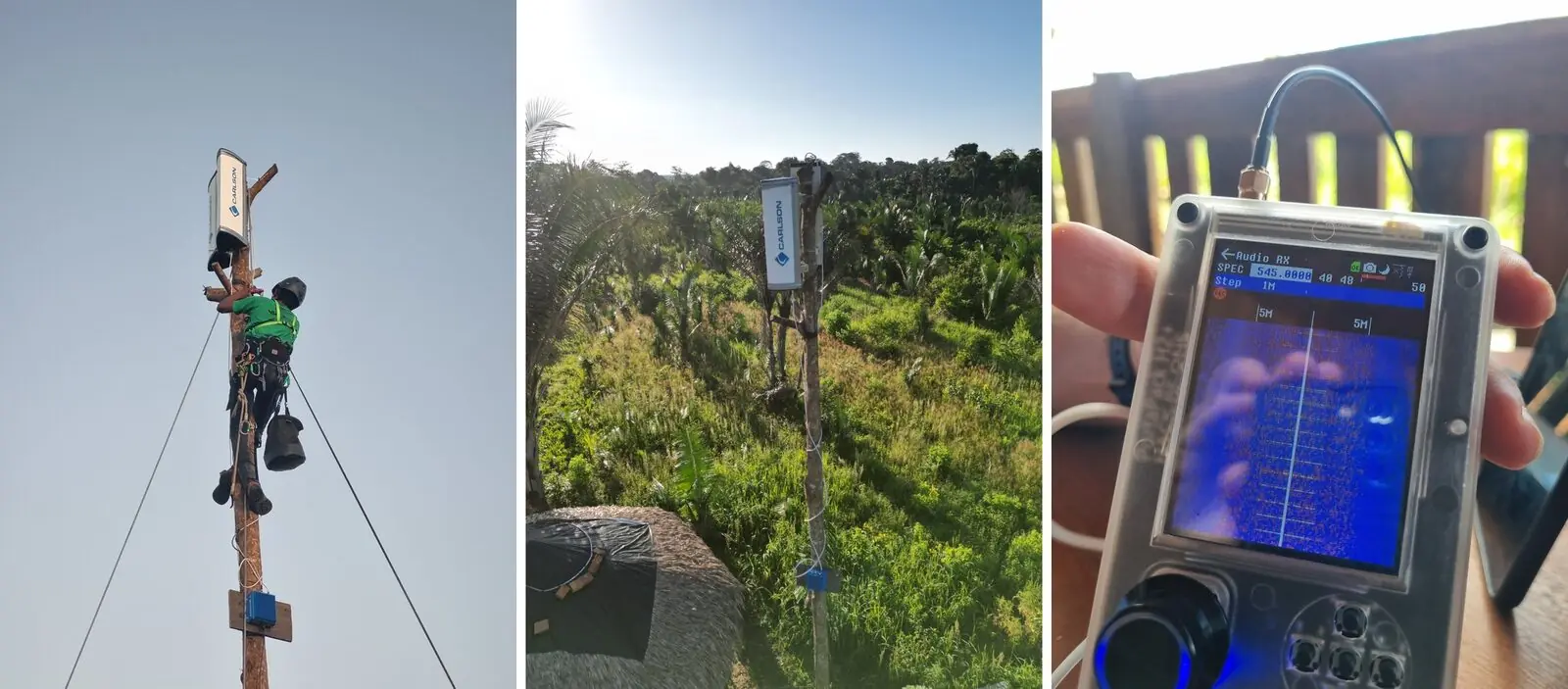
At the core of the kit was the RuralConnect TVWS radio, from the US manufacturer Carlson Wireless. It had a base station with two sector antennas and several CPEs, the smaller radios installed where the connection is used.
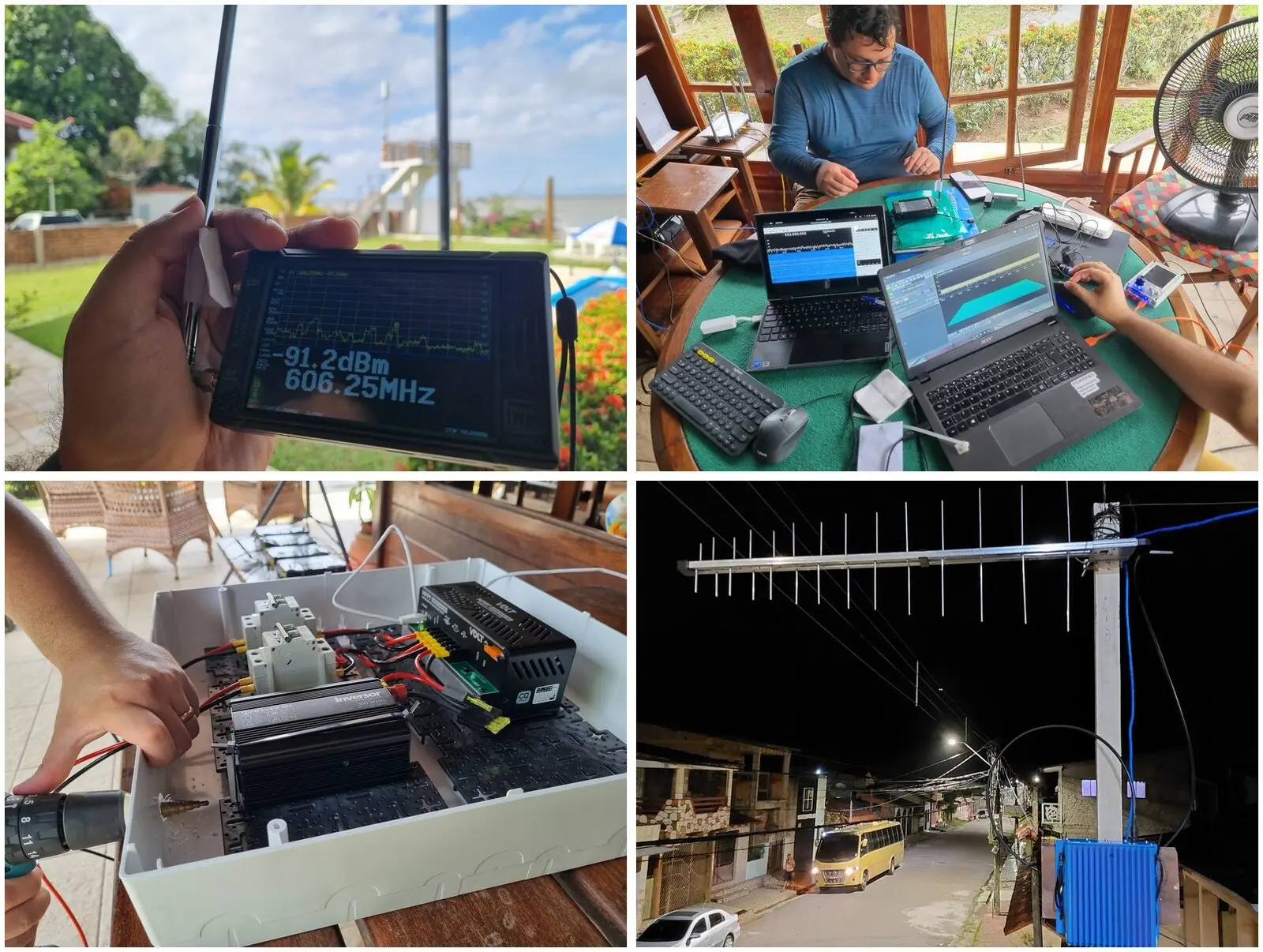
Around it, the team put together a set of tools to measure and power the network:
- power: a solar kit with panels, batteries and a charge controller, designed to work off-grid, away from the power grid;
- signal measurement: software-defined radios ( SDR), such as the HackRF and the RTL-SDR, and handheld spectrum analyzers, such as the tinySA;
- cables and antennas: a NanoVNA, to measure how much signal each cable loses;
- planning: link simulations in Radio Mobile and drone flights to survey the terrain.
What did Phase 1 teach us?
The main conclusion had two sides. TVWS showed it can cross the forest without line of sight. But the equipment used in the pilot did not prove to be a solution that could be repeated in many places at an affordable cost. Buying and importing the kit was slow and expensive. In the field, every problem meant opening radios, replacing cables and measuring again.
Three lessons shaped the new proposal:
- Test first, close to home. A controlled, easy-to-reach setting saves trips and lets the team repeat tests until they can be trusted.
- The territory matters as much as the technology. The Terra Indígena Caru is remote and sees frequent conflicts, which limited working time and the team’s safety.
- No single technology solves everything. TVWS brings the connection to the community, but the network still has to circulate inside it.
What is the new proposal?
Phase 2, again supported by the Internet Society Foundation through the BOLT programme, was organized in three strands:
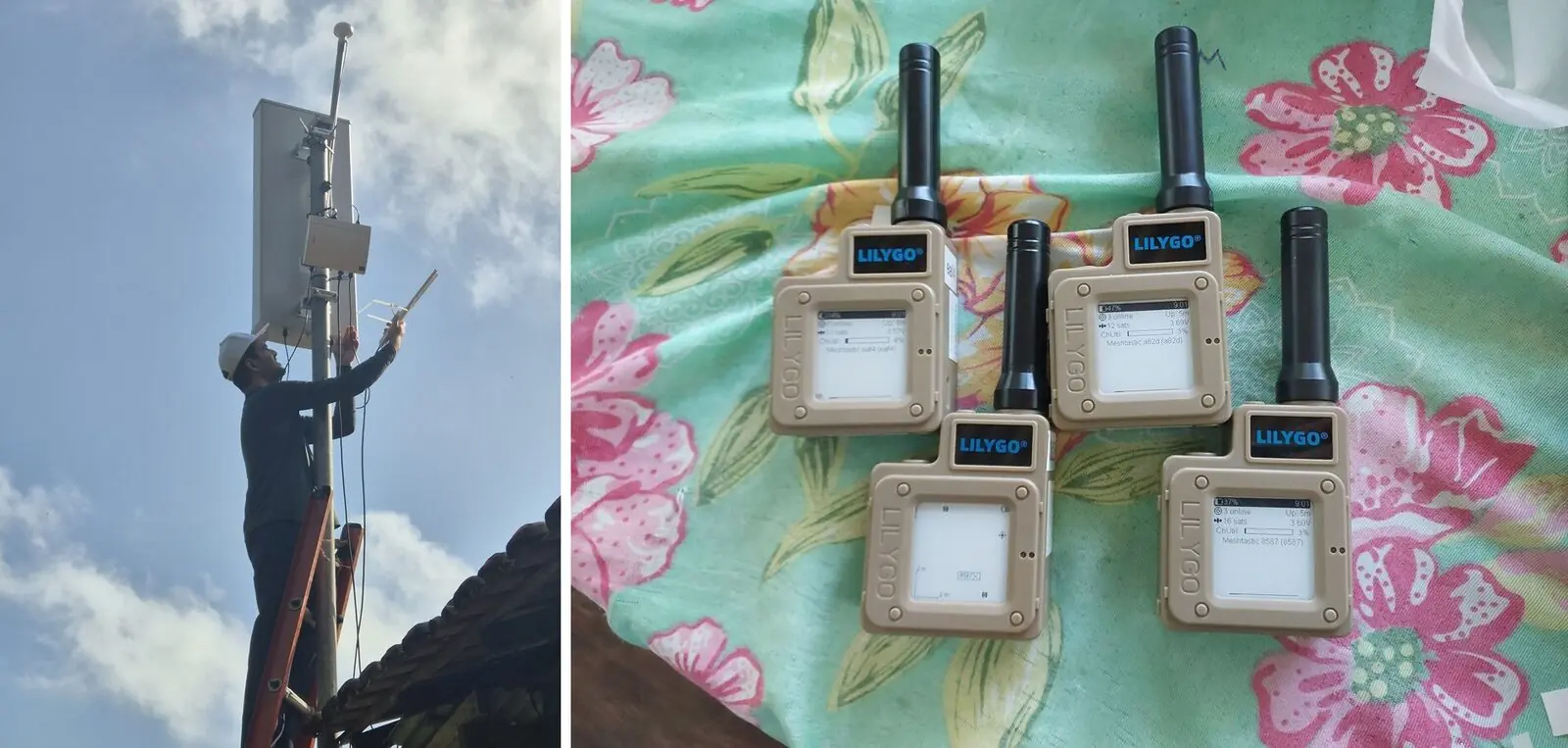
- A new generation of TVWS. Smaller, faster and easier-to-install equipment from the manufacturer WiFROST. The new base station works with its own network core, the EPC, which authenticates the CPEs and routes data to the internet.
- A second sub-gigahertz layer: LoRa and Meshtastic. LoRa is a long-range, low-power radio technology that runs on very little energy, even on small solar panels. With the open firmware Meshtastic, each radio becomes a node in a mesh network that relays text messages to its neighbours, even without internet. It does not replace TVWS, which carries internet. It serves local communication, monitoring and emergencies.
- A forum and a workshop to share what was learned in both phases with researchers, communities, manufacturers and government.
Inside each community, the connection is distributed through a wifi mesh network, with community routers and a local monitoring server.
Why a new territory?
Phase 2 left Maranhão and moved to the outskirts of Belém, in Pará. There are quilombola and riverside communities living in the forest there, close to the city but without telecommunications infrastructure. Access is by river and by road, and the work relies on nearby partners: LASSE, a lab at UFPA, and the Guamá Science and Technology Park (PCT Guamá).
The forest is still in the way. But now the lab, the community and an internet exit are only a few hours from one another.
What we learned from this review:
- A promising technology still has to be easy to install and maintain to become a solution.
- Networks in remote areas are built in layers. One carries the connection far, another distributes it, and a third keeps people talking when the internet goes down.
- Choosing where to test is part of the method.
What comes next?
The first step of Phase 2 was to unbox the new equipment and test it far from the forest, at a test site in Rio Grande do Sul, in November 2025.
Further reading
- How TVWS uses free bands of the TV spectrum (Explanation)
- Carlson Wireless RuralConnect (Reference)
Supported by: Internet Society Foundation (BOLT).