What it is
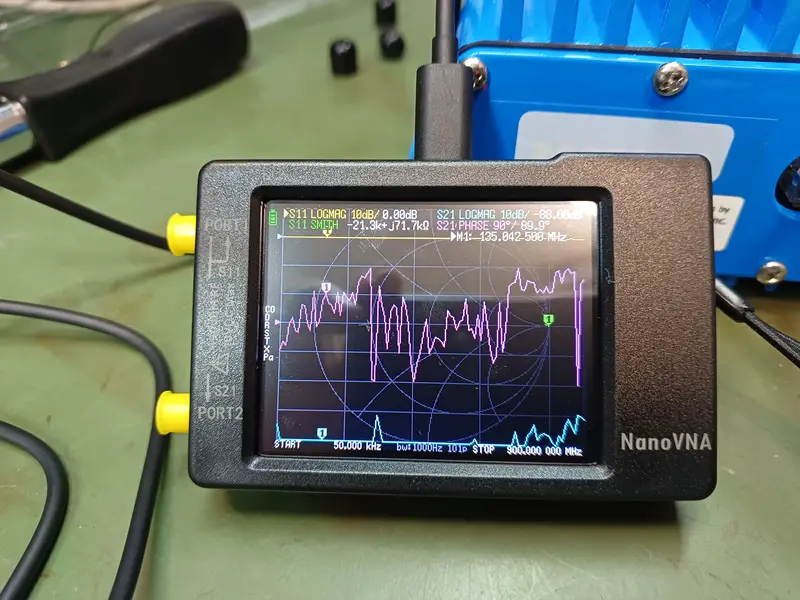
The NanoVNA is a portable, low-cost vector network analyzer (VNA). It is a small instrument, the size of a cell phone, with a screen and two ports for cables. It sends a radio signal through one of the ports and measures how much of that signal reaches the other port and how much comes back reflected.
With these measurements, it is possible to know how much signal a cable loses, whether an antenna is well tuned to the working frequency and whether a connector is faulty. The measurement range goes from 50 kHz up to 1.5 GHz to 4 GHz, depending on the model.
In TECER
It was used in the UFPA/LASSE laboratory to assess the coaxial cables. The measurement confirmed that the cables made in Mosqueiro lost much more signal than the manufacturer’s cables, one of the hypotheses for the short range of the TVWS. The procedure is in Measure the loss of a coaxial cable with the NanoVNA.
Source
- NanoVNA: the project’s official website.